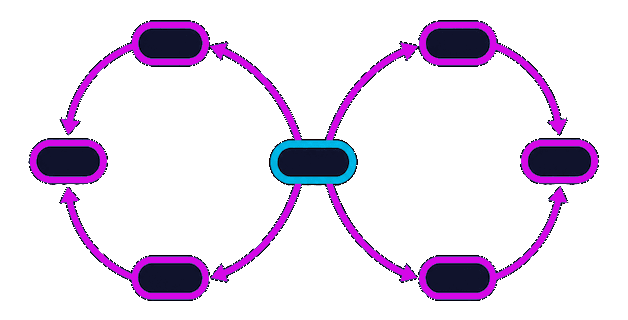
Statewright focuses on a specific agent reliability problem: AI coding agents often have too much tool access at the wrong time. Rather than depending only on natural-language instructions, Statewright uses state-machine guardrails so teams can define workflow phases and control what an agent is allowed to do in each phase. That makes it more of an agent-control layer than a coding assistant by itself, and it fits the growing need for explicit policy around autonomous coding workflows.
In practice, the useful pattern is to model phases such as planning, implementation, testing and review, then restrict tools according to the current state. A coding agent might be allowed to inspect files during planning, edit during implementation, run tests in a verification phase and avoid destructive commands unless explicitly permitted. That fits the direction of Claude Code, Codex, Cursor and MCP-style tool use, where the safety problem is less about text generation and more about actions.
Statewright is still a young project, so teams should treat benchmark and reliability claims carefully until they reproduce them in their own repositories. It may require workflow modeling effort before the benefits are obvious, and overly rigid state machines can slow down exploratory development. Even so, the concept is timely: as coding agents become more autonomous, phase-aware tool permissions are a practical way to reduce accidental damage and make agent behavior easier to reason about.