
Explore / Category guide
AI Security & DevSecOps
Discover the top AI Security & DevSecOps in 2026. Compare architecture, pricing tiers, performance benchmarks, and open-source developer alternatives.
Category overviewAbout AI Security & DevSecOpsRead guideClose guide
This category holds the 103 tools that find security problems in code, in dependencies, in pipelines and — a newer job — in the models and agents a team now ships. If you are responsible for what a scan reports on Monday morning, this is your shelf. The page renders 48 of the 103, so it helps to know which of five jobs you are hiring for.
Secrets. Gitleaks (84/100, Gitleaks, MIT and free) and TruffleHog (86/100, TruffleHog) both scan git history for credentials; TruffleHog's distinguishing move is verifying whether a found secret is still live, which is what separates a real incident from noise. Code. Semgrep (87/100, Semgrep) and SonarQube (87/100, SonarQube) sit in CI and enforce rules; SonarQube's Community Build is free, Semgrep's free tier stops at 10 repos and 10 contributors. Consolidated platforms. Snyk (86/100, Snyk, free tier, Team from $25/mo) and Aikido Security (86/100, free for 2 users, Basic $300/mo) cover several attack surfaces at once, which is a procurement decision as much as a technical one. Code health as a gate. DeepSource (84/100) and CodeAnt AI (82/100) blend static analysis with AI review and reporting.
The fifth job is the one that changed in 2026: securing the AI itself. Of the six most recently touched entries here, five belong to that wave, all verified on 2026-08-16 — MCP-Scan, which scans MCP servers for tool poisoning and prompt injection; DeepTeam, an open-source LLM red-teaming framework covering 40+ adversarial attack types; Giskard, for bias, drift and model vulnerability testing; Microsandbox, which gives agents hardware-isolated microVMs to run code in; and Inspect AI, the UK AI Security Institute's MIT-licensed evaluation framework. NVIDIA's garak (verified 2026-04-21) sits in the same group and already appears in 3 stacks. None of these replace a SAST tool. They answer a question a SAST tool was never asked.
Two caveats before you browse. First, review coverage here is thin: 30 of the 103 tools carry a scored review, so absence of a score is not a verdict — it usually means the tool has not reached the review queue yet. Second, nothing in this category is currently in the graveyard, which is unusual on this site and worth reading as a sign that the field is still adding rather than consolidating.
If you are starting from zero, the cheapest useful sequence is a secret scanner in pre-commit, a rules engine in CI, and only then a platform contract — in that order, because the first two are free and catch the failures that actually get exploited.
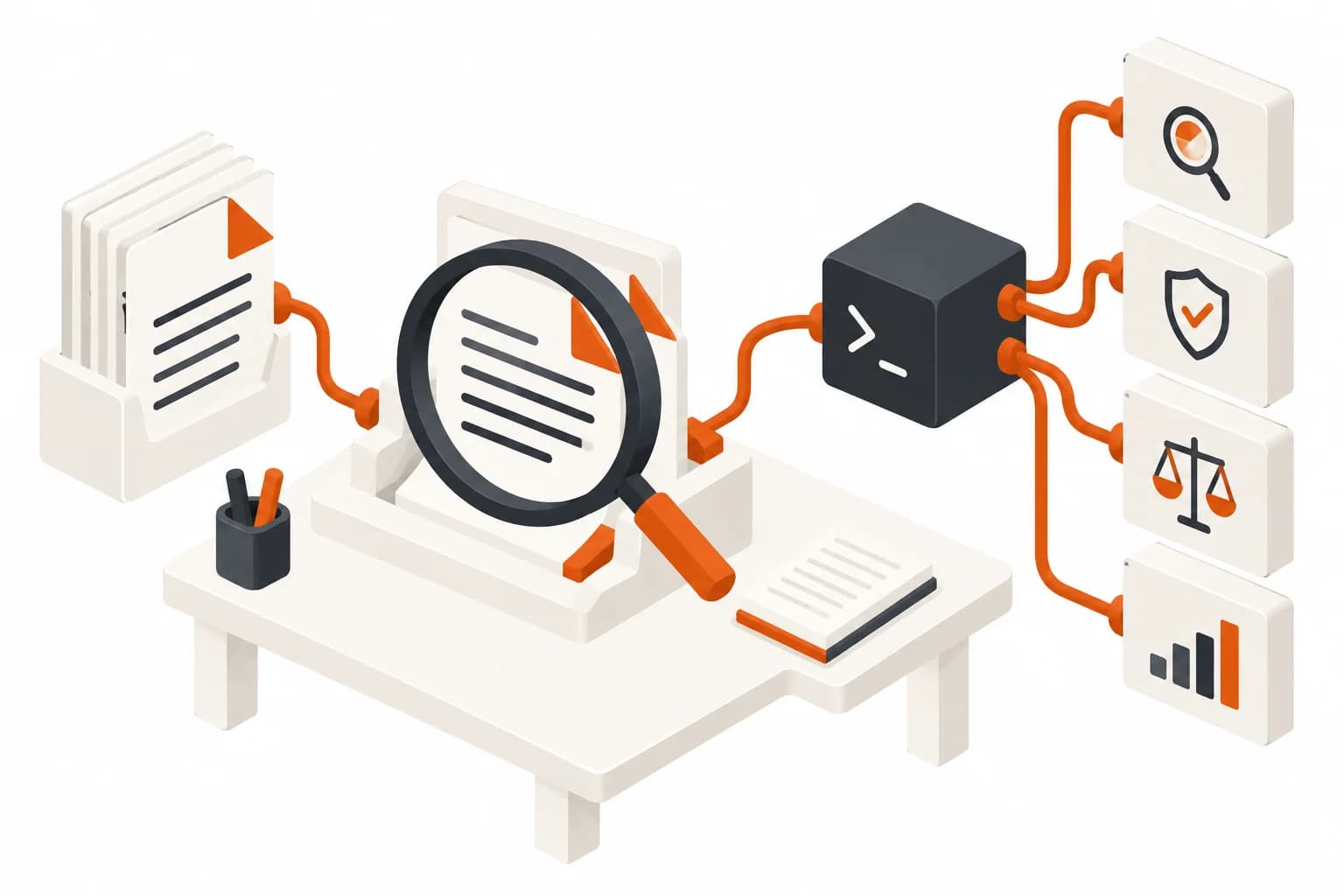
showing 48 of 105 tools

OpenTelemetry-native observability for LLM applications with evals and GPU monitoring
OpenLIT is an open-source AI engineering platform that provides OpenTelemetry-native observability for LLM applications. It combines distributed tracing, evaluation, prompt management, a secrets vault, and GPU telemetry in a single self-hostable stack. With 50+ integrations across LLM providers and frameworks, it lets teams monitor AI applications using their existing observability backends like Grafana, Datadog, or Jaeger.
eBPF-based networking, security, and observability for Kubernetes
Cilium is a CNCF Graduated, Apache-2.0 project for Kubernetes networking, security, and observability using eBPF. It can replace kube-proxy, enforce identity-aware L3-L7 network policies, and add Hubble flow observability plus Tetragon runtime-security signals. Current source checks support GKE Dataplane V2 using Cilium/eBPF and Azure CNI Powered by Cilium for AKS.

Security scanner for MCP servers against tool poisoning attacks
MCP-Scan is a security tool that scans MCP servers for vulnerabilities including tool poisoning, prompt injection, cross-origin escalation, and rug pull attacks. Acquired by Snyk in 2026, it is the first dedicated security scanner for the MCP ecosystem. It analyzes tool descriptions, permissions, and behavior patterns to detect malicious or compromised MCP servers before they can exploit AI agents.

Identity-aware VPN and reverse proxy for zero-trust remote access
Identity-based remote access platform built on WireGuard that combines reverse proxy and VPN capabilities. Pangolin supports clientless browser access for web apps and client-based private-resource access across macOS, iOS, Windows, Linux, and Android, with zero-trust rules, peer-to-peer tunnels, automatic SSL, SSO/OIDC options, and cloud or self-hosted deployment.

Fast open-source SAST with custom rules
Semgrep is an AppSec platform with a widely used open-source engine for readable code rules plus commercial SAST, supply-chain and secrets workflows. Current product positioning emphasizes AI-assisted detection, triage and remediation, CI/pull-request integration and managed governance for security teams.

Code quality and security analysis platform
SonarQube is an open-source code quality and security platform with 10K+ GitHub stars that inspects code for bugs, vulnerabilities, code smells, and security hotspots. It enforces quality gates in CI/CD pipelines, supports 30+ languages in Team plans and 40+ in Enterprise, and remains the industry standard for static code quality management.

Unified code-to-cloud security platform for developers
Aikido Security is an all-in-one AppSec platform unifying SAST, DAST, SCA, CSPM, secrets detection, container scanning, IaC analysis, and runtime protection in a single developer-friendly dashboard. Cuts false positive noise by 95% through reachability analysis that evaluates vulnerabilities in actual deployment context. Features AI AutoFix for one-click remediation, CI/CD gating, and AI-powered pentesting agents. Trusted by 50,000+ organizations. Supports 50+ programming languages.

Developer-first security platform
Snyk is the leading developer security platform providing continuous scanning for vulnerabilities in code (SAST), open-source dependencies (SCA), container images, and infrastructure as code. Integrates directly into IDEs, Git repositories, CI/CD pipelines, and container registries. Features AI-powered fix suggestions, license compliance checking, and real-time vulnerability database. Free for individual developers with paid plans for teams. Supports 30+ programming languages.
Secret scanning across Git history and cloud storage
TruffleHog by Truffle Security scans for high-entropy strings and secrets across GitHub history, S3 buckets, and other data stores with 26.7K+ GitHub stars. It goes beyond simple pattern matching by verifying whether discovered credentials are actually active and valid, significantly reducing false positives and helping teams prioritize remediation of truly exposed secrets.

UK AI Security Institute framework for LLM safety evaluations
Inspect AI is an MIT-licensed framework from the UK AI Security Institute for running large language model evaluations, including tool use, multi-turn dialogue, model-graded scoring, and reusable evaluation tasks.
Microsoft’s public-preview runtime governance toolkit for policy, identity, sandboxing, audit, and MCP security around AI agents.
Agent Governance Toolkit is Microsoft’s MIT-licensed public-preview toolkit for governing AI agent runtimes. It adds policy enforcement, zero-trust identity, execution sandboxing, audit, reliability, and MCP security-gateway patterns around tool calls and autonomous actions, helping platform teams move beyond prompt-only guardrails while preserving architecture review requirements.

Automated code quality platform with AI autofix
DeepSource is a code quality, security, and AI review platform for repositories across GitHub, GitLab, Bitbucket, and Azure DevOps. It combines static analysis, SCA, coverage, license compliance, quality gates, Autofix, and AI Review. Team is listed at $24/user/month yearly; Open Source is limited to public repositories with 1,000 PR reviews/month, while AI Review/Autofix use credits or pay-as-you-go.

Secrets security and non-human identity governance across code, CI/CD, endpoints, CLI/IDE/API, and MCP workflows.
GitGuardian is a secrets security and non-human identity governance platform for finding, triaging, and remediating leaked credentials across repositories, CI/CD, developer endpoints, CLI/IDE workflows, APIs, and MCP-connected environments. It combines managed incident workflow with developer-side prevention, Endpoint Protection, and broader credential lifecycle governance.
Open-source secret detection for Git repositories
Gitleaks is an open-source secret scanner with 27K+ GitHub stars that detects hardcoded passwords, API keys, tokens, and private keys in Git repositories, files, directories, and full Git history. It integrates via GitHub Actions, pre-commit hooks, CI/CD pipelines, and single-binary local scans.

Autonomous AI pentester for web apps and APIs
Shannon is an autonomous white-box AI pentesting tool for web applications and APIs. It analyzes authorized source code, identifies attack vectors, attempts proof-by-exploitation, and produces remediation-ready reports. Shannon Lite is AGPL-3.0 for local use, while Shannon Pro is the commercial Keygraph platform for continuous security testing.

Managed SonarQube Cloud code quality and security analysis for CI/CD workflows.
SonarQube Cloud, still commonly associated with the SonarCloud name, is SonarSource’s managed code quality and security SaaS for GitHub, GitLab, Bitbucket, and Azure DevOps. It scans pull requests for bugs, vulnerabilities, security hotspots, code smells, duplication, and coverage regressions, then enforces Quality Gates without running SonarQube Server. Current Sonar docs frame the cloud service around 40+ languages, with Team from $32 monthly and Enterprise custom.

AWS AI coding assistant with code generation and security scanning
AI coding assistant from AWS with inline code suggestions, chat, code transformation, and built-in security vulnerability scanning. Deep integration with AWS services and CLI makes it particularly powerful for cloud-native development. Helps developers modernize legacy code, optimize AWS resource usage, and implement security best practices across their entire development workflow.

Telemetry-aware AI code reviewer that checks how pull requests may affect real services.
Baz is an AI code-review platform focused on production-aware pull requests. Instead of only reading the diff, Baz connects code changes to application telemetry so reviewers can understand what endpoints, services, and runtime behavior may be affected. That makes it a useful complement to existing AI PR bots when the question is not just whether a change looks correct, but whether it could break a live system.

All-in-one AI code review, security, and quality
CodeAnt AI combines AI code review, SAST, secret detection, IaC security, policy enforcement, compliance dashboards, and agentic pentesting in one platform for engineering teams that want code quality and security checks before production.
Open-source vulnerability management aggregator
DefectDojo is an open-source vulnerability management platform with 4.7K+ GitHub stars that aggregates findings from 200+ security tools into a single view for ranking, triaging, and tracking remediation. It serves as the operating system for security teams by normalizing data from SAST, DAST, container scanners, and dependency checkers into a unified workflow with deduplication and metrics.

CyberArk's open-source LLM fuzzing framework for AI security testing
FuzzyAI is CyberArk's Apache-2.0 framework for fuzzing LLM APIs to identify jailbreaks and related security vulnerabilities. Current README examples cover Ollama/local models, OpenAI, Anthropic, custom REST endpoints, and attacks such as ManyShot, Taxonomy, and ArtPrompt. Use it as a repeatable security-testing starting point, not a complete AI risk-management system.

Microsoft’s pytest-native red teaming framework for turning AI agent safety findings into CI tests.
RAMPART is an open-source Microsoft framework for safety and security testing of agentic AI applications. It brings red-team findings into a pytest-native workflow so teams can turn prompt injection, unsafe tool use, and behavioral boundary failures into repeatable regression tests. The strongest aicoolies angle is developer workflow: RAMPART makes agent safety part of CI/CD instead of a one-off security review.
Open-source Kubernetes security platform for risk analysis and compliance
Kubescape is a CNCF-backed open-source Kubernetes security platform that scans clusters, manifests, and container images for vulnerabilities, misconfigurations, and compliance violations. It checks against NSA-CISA, MITRE ATT&CK, and CIS benchmarks, integrates into CI/CD pipelines, and provides runtime threat detection via eBPF. Supports SBOM generation and vulnerability scanning. Used by ARMO with growing enterprise adoption in cloud-native security.
Meta's open-source LLM security suite with Llama Guard and CodeShield
PurpleLlama is Meta's open-source suite of tools for evaluating and improving LLM safety. It includes Llama Guard models for input/output content safety classification, LlamaFirewall for multi-layer defense, CodeShield for insecure code detection, and CyberSecEval benchmarks for measuring LLM security. Llama Guard 4 supports multimodal safety across text and images. 4,100+ GitHub stars, backed by Meta AI with 44+ contributors.
Zero Trust runtime security for Kubernetes and AI
AccuKnox provides Zero Trust runtime threat prevention for Kubernetes and cloud workloads with an AI-powered prompt firewall to prevent LLM injection attacks. Built on the open-source KubeArmor project, it manages Kubernetes identities via policy-as-code, enforces runtime security policies, and provides real-time workload protection for AI-native infrastructure environments.

AI observability with security posture management
Coralogix uses AI to provide actionable insights across logs and traces with a dedicated AI-SPM dashboard for tracking prompt injections and data leaks in AI applications. Its pay-per-use model with no upfront fees integrates security posture management directly into the observability stack, making it uniquely positioned for teams running both traditional and AI-powered production workloads.

AI quality testing for bias, drift, and vulnerabilities
Giskard is an open-source testing framework for evaluating AI model quality, detecting bias, data drift, and security vulnerabilities. It provides automated test generation for LLMs and tabular models, scanning for issues like hallucination, prompt injection susceptibility, stereotypical outputs, and data leakage. Integrates with CI/CD pipelines for continuous model validation before deployment.
Unified AI code review and application security platform
Panto AI is a unified AI-driven code review and application security platform that combines static analysis, secrets detection, dependency scanning, and infrastructure-as-code security into a single PR workflow. It contextualizes issues based on repository structure and code history to deliver actionable insights directly within pull requests on GitHub, GitLab, and Bitbucket with zero-configuration onboarding and compliance-ready reporting for SOC 2, ISO, and PCI-DSS.

Local microVM sandboxes for AI agent code execution
Microsandbox provides hardware-level isolated sandboxes for AI agents to execute code safely on local machines. Using libkrun microVMs and a 320ms bare-metal Linux/KVM homepage benchmark, it offers stronger isolation than Docker containers while staying lightweight enough for dev workstations. OCI-compatible with Python and Node.js runtimes. Apache-2.0 licensed with 6.6K+ GitHub stars.
Security scanner for AI model files
ModelScan by Protect AI is an open-source tool that scans machine learning model files for malicious or unsafe code before they are loaded into production. Supporting formats like Pickle, HDF5, and SavedModel, it detects hidden code execution, deserialization attacks, and supply chain threats in the AI/ML model artifact pipeline, integrating into CI/CD as a critical security gate.

AI-native security for coding agents
Corridor is an AI-native security platform that intercepts vulnerabilities at the code generation layer, providing real-time guardrails and automated PR security reviews for teams using AI coding agents like Cursor, Claude Code, and GitHub Copilot. Founded by former CISA Secure by Design lead Jack Cable and backed by $25M Series A from Felicis at a $200M valuation, Corridor embeds proactive security context into developer workflows via MCP server integration.

Prompt fuzzing tool for LLM security testing
ps-fuzz by Prompt Security is a security testing tool with 680+ GitHub stars that fuzzes system prompts against dynamic LLM-based attack scenarios including jailbreaks, prompt injection, and data extraction attempts. It helps developers harden their GenAI applications by simulating adversarial attacks in a controlled environment, turning LLM security into a testable and reproducible quality gate.

Password manager with dev tools
Leading password manager and digital identity protection platform that securely stores, organizes, and auto-fills passwords, credentials, sensitive documents, and secrets across devices. 1Password uses AES-256 zero-knowledge encryption with Watchtower breach alerts, Travel Mode, secure sharing, and developer features including CLI tools, SSH agent integration, and CI/CD secrets management.
AI red teaming and infrastructure security scanner by Tencent
AI-Infra-Guard is Tencent's open-source AI security platform providing one-click evaluation of AI infrastructure risks across five modules. It covers insecure config detection, multi-agent workflow evaluation, MCP server scanning across 14 risk categories, vulnerability scanning for 55+ AI frameworks with 1,000+ CVE mappings, and jailbreak evaluation for prompt robustness. Deployable via Docker with academic backing from Peking and Fudan Universities.
Security scanner for AI agentic workflows and MCP servers
Agentic Radar is an open-source CLI security scanner that maps attack surfaces in agentic AI workflows. It detects MCP servers, visualizes agent tool chains, and validates against OWASP LLM Top 10 vulnerabilities including prompt injection and excessive agency. Supports scanning CrewAI, LangGraph, AutoGen, and Semantic Kernel pipelines. Built by SPLX AI with active development and MCP-specific detection capabilities added for the growing MCP ecosystem.

LLM vulnerability scanner and red teaming kit
Agentic Security is an open-source vulnerability scanner for LLM agent workflows that tests AI systems against jailbreaks, fuzzing, and multimodal attacks. It probes weaknesses across text, image, and audio inputs through multi-step jailbreak simulations, randomized stress testing, and reinforcement learning-powered adaptive attacks. The toolkit connects directly to LLM APIs for high-volume real-world attack scenarios, helping developers identify and patch safety gaps before deployment.
AI security triage for small engineering teams
Amplify Security is an AI-native security tool designed for small-to-mid engineering teams that automates the triage of security alerts and integrates directly into GitHub and GitLab workflows. It specifically addresses alert fatigue by using AI to prioritize high-risk findings over low-severity noise, offering a free tier for small teams that makes developer-first security accessible without enterprise budgets.
Craft image-scaling prompt-injection payloads to red-team multimodal AI systems
Open-source red-team toolkit from Trail of Bits that generates image-scaling attack payloads — images that look benign at full resolution but reveal a hidden prompt injection after a multimodal system downsamples them.

Local-first auditable AI agent workspace and append-only runtime
Apache Maka is an open-source, local-first AI agent workspace under the Apache Software Foundation that uses an append-only event log to record model messages, tool calls, and permissions for deterministic session replay and auditability.

Pipelineless AppSec for AI-driven development
Arnica is a pipelineless application security platform that scans every code push in real-time across SAST, SCA, IaC, secrets, and license risks without CI/CD pipeline integration. Its Arnie AI engine combines deterministic static analysis with multi-agent reasoning to detect logic flaws and vulnerabilities in both human-written and AI-generated code. It integrates directly with GitHub, GitLab, Bitbucket, and Azure DevOps for 100% repository coverage from day one.

AI agent framework for offensive security and penetration testing
Alias Robotics' agent framework for building AI-driven offensive-security workflows — reconnaissance, exploitation, privilege escalation, and lateral movement — with multi-agent handoffs and human-in-the-loop control. Source-available, but the core is licensed for non-commercial research use only.

AI security and enablement for enterprise and government
CalypsoAI is an AI security and enablement platform providing model validation, prompt filtering, access controls, and model provenance for enterprise and government deployments. It focuses on high-assurance AI use cases with features for content filtering, usage monitoring, and policy enforcement across LLM applications. Serves Department of Defense and regulated enterprise customers requiring strict AI governance.
Enterprise application security testing platform
Checkmarx is an enterprise application security testing platform providing SAST, SCA, DAST, API security, IaC scanning, and container security in a unified solution. Features AI-powered vulnerability detection, automated remediation guidance, and correlation across scan types to prioritize the most critical risks. Supports 30+ programming languages with deep framework-specific rules. Integrates with all major IDEs, Git platforms, and CI/CD pipelines. Used by Fortune 500 companies globally.

AI-powered SAST for PR-time security analysis
CodeThreat provides pull request-time security analysis covering SAST, dependency vulnerability checks, and infrastructure-as-code risk review. Highly rated for its seamless GitHub integration, it catches security issues introduced by both human and AI-generated code before they reach production, with particular strength in identifying vulnerabilities from rapid vibe coding workflows.

AI-native AppSec that finds and fixes vulnerabilities
Corgea is an AI-native application security platform that uses LLMs to scan, triage, and automatically fix security vulnerabilities in code. Unlike traditional SAST tools that only detect issues, Corgea focuses on the remediation phase by generating context-aware fixes for vulnerabilities, significantly reducing the time engineering teams spend on security backlog while providing contextual PR reviews and IDE integrations.
Agentic application security from prompt to cloud
Cycode is an AI-native application security platform that converges AST, SSCS, and ASPM into a single solution with the Maestro AI orchestrator managing multi-agent security workflows. It provides native SAST, SCA, secrets detection, IaC scanning, and container security alongside ConnectorX integration with 100+ third-party tools. Cycode's AI Exploitability Agent reduces false positives by 94%, and the Context Intelligence Graph maps risk across code, pipelines, and runtime environments.

Open-source LLM red-teaming framework with 40+ attack types
DeepTeam is an open-source red-teaming framework for systematically testing LLM applications against 40+ adversarial attack types. It covers OWASP Top 10 for LLMs including jailbreaks, prompt injection, PII leakage, and hallucination attacks. Built as the sister project of DeepEval for security testing alongside evaluation. Apache-2.0 licensed.

Universal secrets management platform
Doppler is a secrets management platform that centralizes environment variables and configuration across applications, CI/CD pipelines, and cloud infrastructure. Features automatic secret syncing to 150+ integrations including AWS, GCP, Azure, Vercel, Netlify, Docker, and Kubernetes. Provides versioned secret history, access controls with audit logs, secret rotation, environment-specific configs, and a CLI for local development. Replaces scattered .env files with a single source of truth.
Community tiers
A different perspective: rank the tools you know from S to D.
Sources & verification
- OWASP Top 10 for Large Language Model Applications
- Open Source Security Foundation (OpenSSF - Linux Foundation)
Verification dates are editorial checks. Routine CMS saves and automatic updatedAt timestamps do not advance them.