
# Guardrails
5 tools tagged
showing 5 of 5 tools

Microsoft’s pytest-native red teaming framework for turning AI agent safety findings into CI tests.
RAMPART is an open-source Microsoft framework for safety and security testing of agentic AI applications. It brings red-team findings into a pytest-native workflow so teams can turn prompt injection, unsafe tool use, and behavioral boundary failures into repeatable regression tests. The strongest aicoolies angle is developer workflow: RAMPART makes agent safety part of CI/CD instead of a one-off security review.

AI security and enablement for enterprise and government
CalypsoAI is an AI security and enablement platform providing model validation, prompt filtering, access controls, and model provenance for enterprise and government deployments. It focuses on high-assurance AI use cases with features for content filtering, usage monitoring, and policy enforcement across LLM applications. Serves Department of Defense and regulated enterprise customers requiring strict AI governance.

Input and output security scanners for LLM applications
LLM Guard is an open-source security toolkit by Protect AI that provides 15 input scanners and 20 output scanners to protect LLM applications from prompt injection, PII leakage, toxic content, secrets exposure, and data exfiltration. Each scanner is modular and independent — pick the ones you need, configure thresholds, and chain them into a pipeline. The library works with any LLM and has been downloaded over 2.5 million times. MIT licensed, Python 3.9+.

Behavioral control layer for reliable customer-facing AI agents
Parlant is an open-source framework that adds behavioral governance to conversational AI agents. Instead of relying on prompt engineering alone, it lets teams define explicit policies, conversation guidelines, and behavioral rules that agents follow predictably across multi-turn interactions. Parlant sits between the LLM and the user-facing interface, enforcing consistent agent behavior for customer support, sales, and service automation use cases.
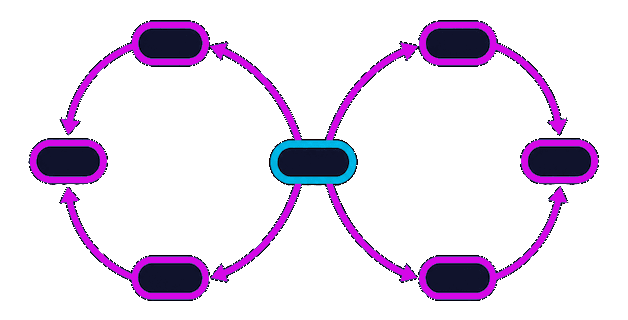
State-machine guardrails for controlling which tools AI coding agents can use at each phase.
Statewright is a guardrail layer for AI coding agents that uses explicit state machines to control what an agent can do at each stage of a workflow. Instead of relying only on prompt instructions, teams can model phases such as plan, implement, test, and review, then constrain tool access for clients like Claude Code, Codex, Cursor, opencode, and related MCP workflows.