
Explore / Tools
1,322 Developer Tools (2026)
Explore the developer tool catalog, from coding assistants and editors to terminals, data tools, and deployment platforms. Use search and filters to narrow the list, then open a tool to examine its capabilities, pricing information, and available editorial coverage in context.
1322 tools indexed
showing 48 of 1322 tools

Apple's Safari-native MCP server for web debugging agents
Safari MCP Server is Apple's safaridriver-based MCP server in Safari Technology Preview, giving compatible coding agents local access to Safari page content, console logs, network requests, screenshots, JavaScript evaluation, interactions, viewport controls, and accessibility/performance checks.

Multi-agent model API that orchestrates frontier models behind one OpenAI-compatible endpoint
Sakana Fugu is a hosted model-provider API that exposes a learned multi-agent system as one OpenAI-compatible model. It dynamically routes coding, code review, research, and reasoning tasks across a frontier-model pool, with Fugu for lower-latency work and Fugu Ultra for harder workloads where answer quality matters more than cost or speed.

Runtime guardrails validating AI agent actions before execution
Salus is a YC W26-backed platform that provides runtime guardrails for AI agents, validating actions before execution using policy-as-code defined in YAML, markdown, or plain English. It features evidence grounding for decision verification, structured feedback enabling 58% recovery rate when actions are blocked, plus PII detection, budget protection, and human-in-the-loop escalation. Agents with Salus follow policies at up to 60% lower cost with 52% reduced misalignment on frontier models.

Component toolkit for live code playgrounds
Sandpack is a component toolkit by CodeSandbox for building live-running code editing experiences directly in the browser. It bundles a full in-browser JavaScript bundler, CodeMirror editor, and preview pane into embeddable React components with npm dependency support, hot module reloading, and error overlays. Sandpack powers the interactive examples on the official React documentation and supports templates for React, Vue, Svelte, and vanilla JavaScript.

Composable content platform for structured data
Sanity is a composable content platform providing a real-time, API-first content backend with a customizable editing studio. Content is stored as structured data accessible via GROQ query language or GraphQL. Features real-time collaboration, portable text for rich content modeling, image pipeline with on-the-fly transformations, and webhooks for content-driven workflows. The open-source Sanity Studio provides a fully customizable React-based editing interface deployable anywhere.

AI-native observability for multi-agent systems
Sazabi is an AI-native observability platform designed for fast-moving engineering teams building with LLMs and multi-agent systems. Backed by leaders from Vercel and LangChain, it provides multi-agent tracing, tool-call visualization, and latency analysis for complex agentic workflows. Focuses on helping developers debug the complete path of requests through interconnected agents and tool calls.

Autonomous Kubernetes and GPU infrastructure optimization
ScaleOps provides autonomous real-time management of Kubernetes and GPU infrastructure, reducing cloud costs by up to 80 percent without manual configuration. Backed by 130 million in Series C funding at an 800 million dollar valuation, it serves enterprises including Adobe, Wiz, DocuSign, and Salesforce. The platform continuously rightsizes pods, optimizes replicas, manages nodes, and allocates GPUs based on live workload demand rather than static configurations.

Validated agent skills and database connectors for AI co-scientist workflows
Scientific Agent Skills is an open-source library of 165+ validated agent skills and 100+ scientific database connectors. It equips AI agents across Claude Code, Cursor, and Codex with specialized workflows for biology, chemistry, and research.

LLM-powered web scraping with graph-based extraction pipelines
ScrapeGraphAI is a Python library that uses LLMs and graph-based logic to build automated, self-healing web scraping pipelines. Developers describe desired data in natural language and ScrapeGraphAI constructs a processing graph that extracts structured information from any website. It supports multiple LLM providers, achieves 96%+ accuracy on semantic extraction benchmarks, and adapts to layout changes automatically. Over 20,000 GitHub stars.

Auto-capture workflows into step-by-step documentation
Scribe automatically captures your on-screen workflows and converts them into step-by-step documentation with annotated screenshots. Simply perform a process with the browser extension or desktop app active, and Scribe generates a shareable guide with numbered steps, highlighted click targets, and descriptive text. Used for creating SOPs, training materials, and onboarding docs without manual documentation effort.

Parallel coding agent environment by Imbue for complex projects
Sculptor by Imbue is a parallel coding agent environment that enables multiple AI agents to work simultaneously on different parts of a codebase. It provides sandboxed execution environments where agents can write, test, and iterate on code independently before merging changes. Designed for large-scale software projects where single-agent approaches hit context and coordination limits.

AI-native state store with hybrid vector and full-text search
SeekDB is an open-source AI-native state store from the OceanBase ecosystem that combines MySQL-compatible data access with hybrid vector and full-text retrieval. It targets agent and AI application teams that need embedded or server deployment, copy-on-write style sandboxes, and searchable state without gluing together several separate storage layers.
Microsoft's AI orchestration SDK for .NET, Python, and Java
Microsoft's open-source AI SDK that lets you combine AI models with conventional programming. Supports plugins, planners, memory, and function calling with availability for .NET, Python, and Java. Designed for enterprise developers building AI-powered applications within the Microsoft ecosystem, offering deep integration with Azure AI services and existing business logic.

Self-hosted UI and API for Ansible, Terraform, and scripts
Semaphore UI provides a web interface and REST API for running Ansible playbooks, Terraform and OpenTofu configurations, Bash scripts, and PowerShell commands from a centralized self-hosted platform. With over 13,000 GitHub stars and 2 million Docker pulls, it replaces AWX and manual terminal execution with a polished dashboard for scheduling, access control, notifications, and execution history across mixed infrastructure automation environments.

Promise-based Node.js ORM
Mature, promise-based ORM for Node.js supporting PostgreSQL, MySQL, MariaDB, SQLite, and SQL Server. Features model definitions with validations, eager/lazy loading, transactions, migrations, raw queries, and lifecycle hooks. Supports soft deletes, scopes, and virtual fields. One of the oldest and most battle-tested Node.js ORMs, widely used in enterprise apps though increasingly succeeded by Prisma and Drizzle in new projects.

Rust-powered coding agent and pair programmer by OVH
ShAI (Shell AI) is a CLI that brings natural language to the command line, turning plain English descriptions into executable shell commands tailored to your OS and shell. Offers command generation plus command explanation (paste an unfamiliar command, get a breakdown). Adapts syntax for macOS, Linux, and Windows across bash, zsh, fish, and PowerShell. The OVH shai variant extends further into a full pair-programming coding agent with support for multiple LLM providers.

Browser-based AI SQL editor with modern UX
Sheeta.ai is a browser-based AI SQL editor designed to modernize the data workflow with a simple, intuitive interface and high-accuracy query generation. It addresses the UX gaps of traditional database tools like DBeaver by providing a clean, modern interface with AI-powered query suggestions, schema visualization, and result exploration built for the contemporary data stack.

AI-powered command-line productivity tool
ShellGPT (sgpt) is a command-line productivity tool powered by OpenAI models that generates shell commands, code snippets, and documentation directly in the terminal. Integrates with Bash, Zsh, PowerShell, and CMD; places AI-suggested commands into the terminal input via hotkeys. Supports persistent chat sessions, a REPL mode, and custom Python functions for extending capabilities. Accepts stdin and arguments for pipe-based workflows where command output can be piped to the AI.

Hunt down social media accounts by username across 400+ platforms
Sherlock is a Python CLI tool that searches for a given username across 400+ social networks and websites simultaneously. It is widely used in OSINT investigations, security audits, red teaming exercises, and digital footprint analysis. Sherlock is included in Kali Linux and Parrot Security distributions and has over 76,000 GitHub stars, making it one of the most popular open-source security tools.

Extensible open-source AI code review agent with emerging QA automation
Open-source (MIT) AI code-review agent formerly known as Code Review GPT. Its released workflow reviews pull requests in GitHub Actions or staged changes locally, supports remote MCP tools and project instruction files, and works with Anthropic, OpenAI, OpenRouter, and Cloudflare providers. The main branch also contains an unreleased autonomous QA workflow. Anonymous usage telemetry is enabled by default and can be disabled.

YC-backed cloud deployment platform for Rust and Python applications
Shuttle is a YC-backed cloud deployment platform that simplifies deploying Rust and Python backend applications. Developers annotate their code with Shuttle macros to declare infrastructure needs like databases, caches, and secrets, and Shuttle provisions the resources automatically on deployment. Features instant deployment, automatic HTTPS, and infrastructure-from-code. Over 6,100 GitHub stars.

Visual agent builder with 1000+ integrations
Sim is an open-source platform for building, deploying, and orchestrating AI agents with a visual workflow editor. Connects 1,000+ integrations and LLMs with drag-and-drop canvas design, AI-assisted Copilot for generating nodes from natural language, and built-in knowledge base for RAG. Trusted by 100K+ builders. Includes 11 pre-built workflow templates for quick deployment.

NVIDIA's open-source security scanner for AI agent skills, run before you install them
SkillSpector is NVIDIA's Apache-2.0 security scanner for AI agent skills. Point it at a Git repo, URL, zip, folder or single file and it checks for prompt injection, data exfiltration, privilege escalation, supply-chain and MCP tool-poisoning risks, then returns a 0-100 risk score with a recommendation. Static checks run without an LLM; optional semantic analysis uses a model provider you configure. Reports export as terminal, JSON, Markdown or SARIF for CI.

Run AI workloads on any cloud with automatic cost optimization
SkyPilot is an open-source framework for running LLMs, AI, and batch jobs on any cloud with automatic cost optimization. It supports AWS, GCP, Azure, Lambda Cloud, and more, automatically selecting the cheapest available GPUs and managing spot instance preemption. Features include multi-cloud job scheduling, managed spot jobs with automatic recovery, and cluster autoscaling with 6,000+ GitHub stars.

Where work happens
Enterprise messaging platform for team communication with channels, direct messages, threads, and huddles (audio/video calls). Features rich app integrations via Slack API and Bolt framework, Workflow Builder for no-code automations, Canvas for collaborative docs, Slack Connect for cross-company channels, and file sharing. AI features summarize threads and channels. Integrates with 2,600+ apps. Owned by Salesforce. The de facto real-time communication tool for tech companies and developer teams.

Package manager for MCP servers and agent skills
Smithery is a CLI tool and registry for discovering, installing, and managing MCP servers and agent skills. It lets developers search thousands of available servers, install them with one command, inspect available tools, and connect their AI coding agents to external capabilities through the Model Context Protocol standard.

Hugging Face's lightweight agent framework
smolagents is Hugging Face's lightweight agent framework for building AI agents that can use tools, write and execute code, and collaborate in multi-agent setups. Designed for simplicity with minimal abstractions — agents are just LLMs that write Python code to orchestrate tool calls rather than using JSON-based function calling. Supports any LLM provider, integrates with Hugging Face Hub for sharing tools and agents, and runs with as few as 1,000 lines of core library code.

Data-centric AI platform for programmatic data labeling
Snorkel AI is a data-centric AI platform that enables programmatic labeling of training data through labeling functions rather than manual annotation. Spun out of Stanford AI Lab, it lets teams write Python functions that encode domain heuristics to label data at scale, with the platform combining weak labels into high-quality training sets. Used by Fortune 500 companies for text, image, and structured data labeling.

Supply chain security for npm and Python packages
Socket.dev detects and prevents supply chain attacks in open-source dependencies before they compromise your applications. Unlike traditional SCA tools that match known CVEs, Socket analyzes package behavior — detecting install scripts, network access, filesystem operations, and obfuscated code that indicate malicious intent. Monitors npm, Python (PyPI), and Go packages in real-time. Provides GitHub PR comments with risk assessments for new dependencies added to your projects.

AI production engineer that auto-triages and fixes alerts
Sonarly is a YC W26-backed AI production engineer that autonomously triages production alerts, deduplicates them by root cause, and sends ready-to-merge pull request fixes. It connects to monitoring tools like Sentry and Datadog, analyzes alert patterns to identify the underlying issue, and generates code fixes or optimization recommendations. Built on Claude APIs, Sonarly reduces mean time to resolution for production incidents while minimizing alert fatigue for engineering teams.
Enterprise software composition analysis for supply chain security
Sonatype Lifecycle is an enterprise software composition analysis platform that identifies vulnerabilities, license risks, and quality issues in open-source dependencies throughout the development lifecycle. It integrates with IDEs, CI/CD pipelines, and artifact repositories to block risky components before they enter the codebase. Backed by the largest vulnerability database with proprietary research beyond public CVE data.

ByteDance high-performance JSON library
Sonic is ByteDance's blazingly fast JSON serialization library accelerated by JIT compilation and SIMD instructions. It achieves 3x faster throughput than Go's standard library while using 75% less memory and 99% fewer allocations. Drop-in compatible with encoding/json, it handles both simple Marshal/Unmarshal operations and streaming APIs for high-throughput services processing millions of events.

Self-hosted code understanding for humans and agents
Sourcebot is a self-hosted code intelligence platform that helps developers and AI agents understand large codebases through intelligent search, navigation, and inline-cited answers. Deployed as a Docker container with MCP server support, it indexes thousands of repositories without source code leaving your infrastructure.

AI-powered Infrastructure as Code management platform
IaC orchestration platform with AI-powered policy suggestions, drift detection, and automated remediation. Supports Terraform, OpenTofu, Pulumi, CloudFormation, Ansible, and Kubernetes. Centralizes infrastructure management with approval workflows, cost estimation, and compliance guardrails for teams running multi-cloud environments at scale.

Auto-generate SDKs and docs from backend routes
Speakeasy uses AI to parse backend API routes and auto-generate production-ready SDKs in multiple languages alongside OpenAPI documentation. It ensures that client libraries and documentation always match the current backend implementation, eliminating the drift between API code, SDK behavior, and documentation that plagues most API-first teams as their services evolve.

Toolkit for spec-driven development with AI
GitHub's official toolkit for spec-driven development. Write specifications in natural language and let AI coding agents implement them with structure, consistency, and traceability. Bridges the gap between product requirements and AI-generated code by providing a standardized format that agents can follow reliably across complex projects.

Google Zanzibar-inspired authorization database
SpiceDB is an open-source authorization database inspired by Google's Zanzibar system, providing relationship-based access control (ReBAC) at scale. It defines permissions through a schema language that models relationships between users, resources, and roles, then evaluates authorization checks in single-digit milliseconds. Used by companies like Netflix and GitHub, SpiceDB handles millions of permission checks per second.

Alibaba's Spring framework for building AI applications in Java
Spring AI Alibaba is Alibaba's open-source framework that brings AI capabilities to Java Spring Boot applications. It provides auto-configuration for AI model providers, RAG pipeline components, agent frameworks, and tool integration following Spring conventions. With 9,100 GitHub stars and 220+ contributors, it is the most mature AI framework for Java enterprise developers building production AI features.

Shift-left DAST platform built for CI/CD pipeline integration
StackHawk is a dynamic application security testing platform designed for CI/CD pipeline integration. It tests running web applications and APIs for OWASP Top 10 vulnerabilities including SQL injection, XSS, and authentication flaws during the development process. Built on ZAP with a developer-friendly CLI and YAML configuration, it provides actionable findings with reproducer requests and fix guidance.

Browser-native frontend coding agent for production codebases
Stagewise is an open-source frontend coding agent with 6,500+ GitHub stars that runs directly in the browser on localhost. YC S25 backed, it lets developers and designers point-and-prompt on live web applications with full devtools and console access, bridging the gap between visual editing and production codebase modification.

Generate production-ready SDKs from API specifications
Stainless generates idiomatic, production-ready client SDKs from OpenAPI specifications with features like automatic pagination, retries, streaming, and proper error handling baked in. Used by Anthropic, OpenAI, Cloudflare, and Lithic to maintain their official SDKs. Produces TypeScript, Python, Go, Java, and Kotlin SDKs that match hand-written quality with automated maintenance and versioning.

Build stellar documentation with Astro
Starlight is an open-source Astro-based documentation theme from the Astro team that produces fast, accessible, SEO-friendly docs sites with minimal config. Ships dark mode, full-text search via Pagefind, versioned navigation, i18n, auto-generated sidebars, and beautiful defaults out of the box. Ideal for open-source projects, product docs, and technical handbooks that want first-class performance.

The minimal, blazing-fast shell prompt
Minimal, blazing-fast, cross-shell prompt written in Rust that works with Bash, Fish, Zsh, PowerShell, Ion, Elvish, and Nushell. Provides a single consistent prompt configuration across every shell, showing Git branch, language versions, and cloud context at a glance. Context-aware modules activate only when relevant, keeping startup fast. Configured through a simple TOML file, adding negligible latency. One of the most popular shell prompt tools in the developer community.
State-machine guardrails for controlling which tools AI coding agents can use at each phase.
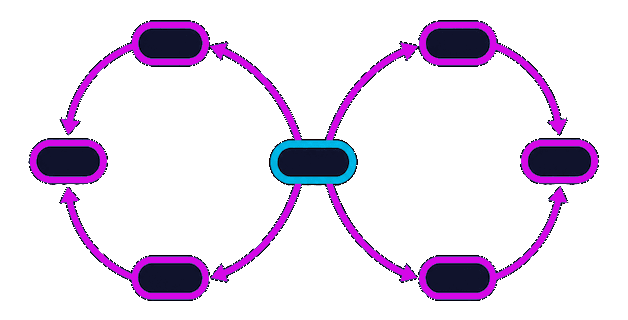
Statewright is a guardrail layer for AI coding agents that uses explicit state machines to control what an agent can do at each stage of a workflow. Instead of relying only on prompt instructions, teams can model phases such as plan, implement, test, and review, then constrain tool access for clients like Claude Code, Codex, Cursor, opencode, and related MCP workflows.

Open-source browser infrastructure for AI agents at scale
Steel is an open-source browser API purpose-built for AI agents, providing managed headless browser sessions with anti-bot bypass, proxy rotation, CAPTCHA solving, and session persistence. It handles the infrastructure layer that browser automation agents like Browser Use and Stagehand run on top of. Self-hostable or available as a cloud service. Over 6,000 GitHub stars.

UI component workshop
Storybook is an open-source workshop for building, documenting, and testing UI components in isolation. Render every visual state of React, Vue, Angular, Svelte, or Web Components, write interaction tests, visual regression tests, and accessibility checks, and publish a living design reference. Trusted by thousands of teams including GitHub, Airbnb, Shopify, and Microsoft as their single source of UI truth.

AWS open-source SDK for building model-driven AI agents
Strands Agents is an open-source SDK from AWS that takes a model-driven approach to building AI agents. Developers define a prompt, model, and tools, and the LLM handles planning and orchestration autonomously. Supports Amazon Bedrock, Anthropic, OpenAI, Gemini, Ollama, and more. Powers Amazon Q Developer and AWS Glue in production. Available in Python and TypeScript with native MCP support.

Open-source headless CMS for developers
Strapi is the leading open-source headless CMS with 65K+ GitHub stars providing a customizable API-first content management system. Auto-generates REST and GraphQL APIs from content types defined through a visual builder. Features role-based access control, media library, internationalization, draft/publish workflow, and a plugin marketplace. Built with Node.js and supports PostgreSQL, MySQL, SQLite, and MariaDB. Self-hostable with Strapi Cloud also available.