
Explore / Category guide
AI Security & DevSecOps
Discover the top AI Security & DevSecOps in 2026. Compare architecture, pricing tiers, performance benchmarks, and open-source developer alternatives.
Category overviewAbout AI Security & DevSecOpsRead guideClose guide
This category holds the 103 tools that find security problems in code, in dependencies, in pipelines and — a newer job — in the models and agents a team now ships. If you are responsible for what a scan reports on Monday morning, this is your shelf. The page renders 48 of the 103, so it helps to know which of five jobs you are hiring for.
Secrets. Gitleaks (84/100, Gitleaks, MIT and free) and TruffleHog (86/100, TruffleHog) both scan git history for credentials; TruffleHog's distinguishing move is verifying whether a found secret is still live, which is what separates a real incident from noise. Code. Semgrep (87/100, Semgrep) and SonarQube (87/100, SonarQube) sit in CI and enforce rules; SonarQube's Community Build is free, Semgrep's free tier stops at 10 repos and 10 contributors. Consolidated platforms. Snyk (86/100, Snyk, free tier, Team from $25/mo) and Aikido Security (86/100, free for 2 users, Basic $300/mo) cover several attack surfaces at once, which is a procurement decision as much as a technical one. Code health as a gate. DeepSource (84/100) and CodeAnt AI (82/100) blend static analysis with AI review and reporting.
The fifth job is the one that changed in 2026: securing the AI itself. Of the six most recently touched entries here, five belong to that wave, all verified on 2026-08-16 — MCP-Scan, which scans MCP servers for tool poisoning and prompt injection; DeepTeam, an open-source LLM red-teaming framework covering 40+ adversarial attack types; Giskard, for bias, drift and model vulnerability testing; Microsandbox, which gives agents hardware-isolated microVMs to run code in; and Inspect AI, the UK AI Security Institute's MIT-licensed evaluation framework. NVIDIA's garak (verified 2026-04-21) sits in the same group and already appears in 3 stacks. None of these replace a SAST tool. They answer a question a SAST tool was never asked.
Two caveats before you browse. First, review coverage here is thin: 30 of the 103 tools carry a scored review, so absence of a score is not a verdict — it usually means the tool has not reached the review queue yet. Second, nothing in this category is currently in the graveyard, which is unusual on this site and worth reading as a sign that the field is still adding rather than consolidating.
If you are starting from zero, the cheapest useful sequence is a secret scanner in pre-commit, a rules engine in CI, and only then a platform contract — in that order, because the first two are free and catch the failures that actually get exploited.
showing 48 of 105 tools

AI-native SAST with contextual security analysis
DryRun Security is an AI-native SAST platform using Contextual Security Analysis to reason about code behavior, data flow, and exploitability instead of regex pattern matching. It provides PR-native security reviews on GitHub and GitLab, catching logic flaws, broken auth, IDOR, and injection bugs that legacy scanners miss while cutting 90% of noise. Features Natural Language Code Policies, DeepScan for full-repo audits, and a Risk Register for org-wide visibility. Supports 14+ languages.

Kernel-space host intrusion detection system
Elkeid is ByteDance's open-source HIDS for hosts, containers, Kubernetes, and serverless workloads. Its kernel-level data collection via Kprobe hooks captures process lineage, privilege escalation attempts, file access patterns, and network connections with minimal overhead. Includes an Agent for telemetry, Detector for rule evaluation, Controller for policy management, and a Dashboard for alerts and investigation.

Dependency lifecycle management and risk reduction
Endor Labs is a dependency management platform that goes beyond vulnerability scanning to assess the overall risk of open-source dependencies. Evaluates maintainer activity, code quality, popularity trends, licensing, and operational risk alongside CVEs. Features reachability analysis to determine if vulnerabilities are actually exploitable in your codebase. Provides dependency selection guidance for choosing safer alternatives. Reduces alert fatigue by prioritizing truly risky dependencies.

AI-powered DAST platform specializing in API and GraphQL security
Escape is an AI-powered dynamic application security testing platform focused on API security including REST, GraphQL, and gRPC endpoints. It automatically discovers and tests API endpoints for vulnerabilities without requiring source code access. Features business logic testing that goes beyond OWASP patterns, CI/CD integration for shift-left security, and detailed remediation guidance for developers.

Python toolkit for assessing and mitigating ML model fairness issues
Fairlearn is a Microsoft-backed open-source Python toolkit that helps developers assess and improve the fairness of machine learning models. It provides metrics for measuring disparity across groups defined by sensitive features, mitigation algorithms that reduce unfairness while maintaining model performance, and an interactive visualization dashboard for exploring fairness-accuracy trade-offs. Integrated with scikit-learn and Azure ML's Responsible AI dashboard.
Cloud native runtime security for Kubernetes
Falco is a CNCF graduated open-source runtime security tool that detects unexpected behavior and threats across containers, Kubernetes, and cloud workloads in real time. Originally created by Sysdig, Falco monitors Linux kernel syscalls using eBPF and applies customizable detection rules to alert on malicious activity like container escapes, cryptojacking, unauthorized file access, and anomalous network connections. It supports 50+ alert output channels including SIEM integration.

Security operations resilience for SOC teams
Fig provides a Security Operations Resilience platform designed for modern SOC teams facing both unplanned and planned changes. Features drift detection to catch unplanned infrastructure changes, automated drift repair with testing, planned change modeling to simulate initiatives before deployment, version control, and automatic deployment with rollbacks. Helps teams maintain security coverage while shipping risk-free at 10x speed and focusing on strategic cyber work.

Open-source microVMs for secure serverless and AI agent sandboxing
Firecracker is an open-source virtual machine monitor that creates lightweight microVMs with sub-150ms cold starts, originally built by AWS for Lambda and Fargate. With 28,000+ GitHub stars, it provides kernel-level isolation for running untrusted code safely and powers the sandboxing infrastructure behind AI coding agents like Devin and E2B.

Continuous security scanning with AI and human expertise
Fluid Attacks integrates continuous vulnerability scanning into the SDLC by combining AI automation with human security expertise to verify critical flaws. The hybrid approach ensures that automated findings are validated by security researchers before reaching developers, reducing false positive noise while maintaining coverage across SAST, DAST, SCA, and infrastructure-as-code security scanning.

MCP server for AI-powered reverse engineering
GhidraMCP is an MCP server that enables LLMs to autonomously perform reverse engineering tasks through NSA's Ghidra disassembly framework. It exposes binary analysis capabilities like decompilation, function listing, cross-references, and symbol analysis as MCP tools, letting AI assistants generate malware reports and analyze compiled binaries.

Validate and structure LLM outputs with composable Guards
Guardrails AI is an open-source Python and JavaScript framework for validating and structuring LLM outputs using composable Guards built from a Hub of pre-built validators. It handles structured data extraction with Pydantic models, content safety checks including toxicity, PII detection, competitor mentions, and bias filtering, plus automatic re-prompting when validation fails. The Guardrails Hub offers dozens of validators from regex matching to hallucination detection via LLM judges.

Enterprise secrets management and data protection
HashiCorp Vault is a source-available secrets management tool with 32K+ GitHub stars providing centralized management of tokens, passwords, certificates, API keys, and encryption keys. Features dynamic secrets that are generated on-demand with automatic revocation, encryption as a service, identity-based access with fine-grained policies, and audit logging. Supports 100+ integrations including AWS, GCP, Azure, Kubernetes, and databases. The enterprise standard for secrets management at scale.

AI security platform for model protection and threat detection
HiddenLayer is an AI security platform that protects machine learning models across their full lifecycle. It provides runtime model security to detect adversarial attacks in real-time, model scanning for supply chain threats in model files, automated red teaming for vulnerability assessment, and AI guardrails for prompt injection defense. Backed by $31.9M from M12 and IBM Ventures, named Gartner Cool Vendor 2024.
Open-source secrets management platform
Infisical is an open-source secrets management platform with 16K+ GitHub stars for syncing environment variables and secrets across teams, CI/CD pipelines, and infrastructure. Features end-to-end encryption, automatic secret rotation, dynamic secrets, access controls with audit logs, and native integrations with AWS, GCP, Azure, Kubernetes, Docker, GitHub Actions, and Vercel. Replaces scattered .env files with a centralized, encrypted secrets store accessible via dashboard, CLI, SDK, or API.

Control plane for autonomous AI agents
Keycard is the control plane for autonomous agents, providing identity verification, policy enforcement, and scoped access management. Resolves agent identity, enforces security policies, and issues time-limited resource-specific access tokens. Provides full visibility into every agent action with drift detection, automatic remediation, and integrations with Datadog, Linear, GitHub, and other services for agent-driven incident response and security operations.

Input and output security scanners for LLM applications
LLM Guard is an open-source security toolkit by Protect AI that provides 15 input scanners and 20 output scanners to protect LLM applications from prompt injection, PII leakage, toxic content, secrets exposure, and data exfiltration. Each scanner is modular and independent — pick the ones you need, configure thresholds, and chain them into a pipeline. The library works with any LLM and has been downloaded over 2.5 million times. MIT licensed, Python 3.9+.

AI security platform for LLM prompt injection protection
Lakera is an AI security platform protecting LLM applications against prompt injection, jailbreaks, data leakage, toxic content, and PII exposure. Lakera Guard provides a real-time API that screens prompts and outputs in under 2ms latency. Trained on the world's largest prompt injection dataset from Gandalf, a public red-teaming game. Deploys as an API proxy or SDK integration with zero model access required. Used by enterprises to secure customer-facing AI applications in production.
Auto-generate API docs from live production traffic
Levo.ai generates OpenAPI specifications and API documentation automatically from live production traffic using eBPF-based instrumentation. It captures real request/response patterns to create always-accurate API docs that eliminate documentation drift. Features include automated API discovery, security testing of documented endpoints, and Postman collection generation without requiring code changes.

AI-first security scanner for LLM, agent, MCP, and RAG codebases
MEDUSA is an AGPL-3.0 AI-first security scanner from Pantheon Security that checks AI and machine-learning applications, LLM agents, MCP workflows, RAG pipelines, repository-poisoning risks, secrets, and agent-specific compromise patterns.

AI-powered file-type detection at Google scale
Open-source AI-powered file-type detection tool from Google that uses a custom deep-learning model under a few megabytes to identify more than 200 binary and textual content types in milliseconds, even on a single CPU. Magika ships as a CLI, Python package, JavaScript/TypeScript library, and an ONNX model, achieves around 99% accuracy on its test set, and is already used at Google scale across Gmail, Drive, and Safe Browsing as well as by VirusTotal and abuse.ch.

Automated AI security testing and red teaming platform
Mindgard is an automated AI security testing platform that provides continuous red teaming for machine learning models and LLM applications. It detects vulnerabilities including adversarial attacks, prompt injection, data poisoning, and model extraction through systematic probing. Offers end-to-end testing across the AI lifecycle with enterprise compliance reporting and integration into CI/CD pipelines.

Secure sandboxed runtime for AI agent execution
NVIDIA OpenShell provides kernel-level isolation for AI agent workloads with Landlock, seccomp, and network namespace sandboxing. Announced at GTC 2026 with 17 enterprise partners including Adobe, Atlassian, SAP, and Salesforce, it offers declarative YAML policy enforcement, L7 HTTP inspection, and GPU passthrough — purpose-built to contain the blast radius when autonomous coding agents interact with filesystems and networks.

Programmable safety rails for LLM applications
NeMo Guardrails is NVIDIA's open-source toolkit for adding programmable safety rails to LLM applications. It supports five guardrail types — input, dialog, retrieval, execution, and output rails — covering content safety, jailbreak detection, topic control, PII masking, hallucination detection, and fact-checking. The toolkit uses Colang, a domain-specific language for defining conversational constraints, and integrates with OpenAI, Azure, Anthropic, HuggingFace, and LangChain/LangGraph.
Open-source zero-trust networking with WireGuard
NetBird is an open-source zero-trust networking platform that creates encrypted WireGuard overlay networks between devices without opening ports or configuring firewalls. It provides peer-to-peer connectivity with NAT traversal, access control policies, DNS management, and a web dashboard for team management. NetBird replaces traditional VPNs with a simpler, more secure mesh networking approach for self-hosted infrastructure and remote teams.
Autonomous AI red teaming with black-box attack simulation
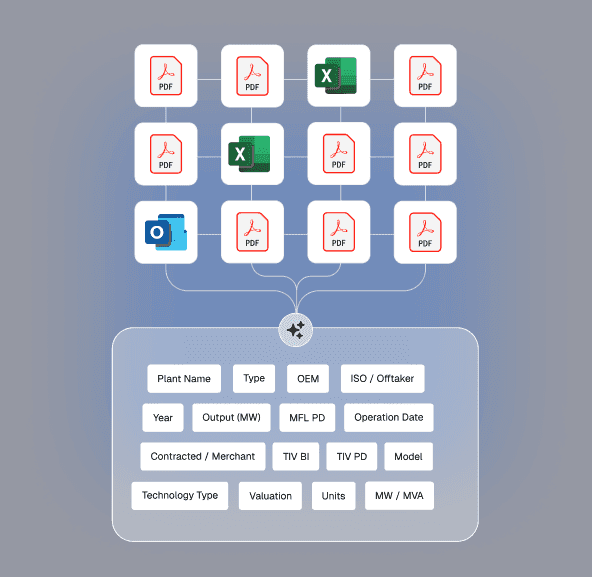
Novee is an AI security platform that performs autonomous black-box red teaming of AI systems. It uses an advanced reasoning engine to simulate determined adversaries, probing for complex chained attack scenarios like prompt injection leading to database access through AI agents. Tests for jailbreaks, data extraction, unauthorized actions, and multi-step exploit chains in LLM applications.

Linux Foundation fork of HashiCorp Vault for secrets management
OpenBao is the Linux Foundation's community-driven fork of HashiCorp Vault created after Vault's license change from open-source to BSL. It provides secrets management, encryption as a service, dynamic credentials, and PKI certificate management. Maintains API compatibility with Vault while developing under truly open-source governance with over 5,700 GitHub stars.
Rust-based agent OS with built-in security, WASM sandboxing, and multi-agent runtime
OpenFang is an open-source agent operating system built in Rust that provides a secure multi-agent runtime with WASM sandboxing, auditability layers, and multi-channel communication. It goes beyond typical orchestration SDKs by treating agent security and operational isolation as first-class concerns, making it suitable for teams deploying agents in environments where trust boundaries and audit trails matter.

Cryptographic signing and verification for ML models
OpenSSF Model Signing is an open-source project for cryptographically signing and verifying machine learning model files to ensure integrity and provenance. Built on Sigstore PKI, it provides CLI tools and a Python library for signing model artifacts and verifying they haven't been tampered with. Part of the OpenSSF AI/ML Working Group, reaching v1.0 in 2025 for production supply chain security.

Open-source PII detection and anonymization for AI data flows
Presidio is an MIT-licensed privacy framework for identifying and anonymizing personally identifiable information in text, images, and structured data. It can act as a de-identification layer around LLM prompts, logs, RAG corpora, and customer-data workflows.

Enterprise middleware for securing AI applications against prompt attacks
Prompt Security provides enterprise security middleware that protects AI applications from prompt injection, data leakage, jailbreaks, and toxic content generation. It sits between users and LLM APIs to inspect, filter, and sanitize inputs and outputs in real-time. Supports deployment as a proxy, SDK integration, or browser extension with customizable security policies and compliance reporting.

AI/ML supply chain security and model risk management
Protect AI is a YC-backed AI security company focused on ML supply chain protection. Its platform includes ModelScan for detecting malicious code in model files, Guardian for model repository security policies, and NB Defense for Jupyter notebook scanning. Advocates for SLSA-style supply chain standards for ML, helping organizations secure the full pipeline from training data to production model deployment.

Microsoft's automated red teaming framework for AI systems
PyRIT (Python Risk Identification Toolkit) is Microsoft's open-source framework for automated red teaming of generative AI systems. It enables security researchers to probe LLMs for jailbreaks, prompt injection, content safety bypasses, and harmful output generation using multi-turn attack strategies, scoring engines, and orchestrated adversarial workflows. Supports multiple target models and integrates with Azure AI services.

AI testing and evaluation for agents and LLM apps
RagaAI Catalyst is a comprehensive Python SDK for observability, monitoring, and evaluation of LLM and agentic applications. Provides agent tracing with execution graph visualization, self-hosted dashboard with analytics, synthetic data generation, multi-metric evaluation framework, and guardrail management. Built for teams running production RAG systems and AI agents who need systematic testing, debugging, and performance optimization workflows.
DRM and IP protection for AI model weights
RefortifAI is a Y Combinator P2026 batch company that provides DRM and intellectual property protection for AI models by obfuscating model weights so they only run inside a hardened runtime. It solves the critical problem of model weight protection for companies distributing custom LLMs to untrusted environments, preventing IP theft while maintaining inference performance.

AI model validation and risk management platform
Robust Intelligence is an AI risk management platform that validates ML models for security, fairness, and reliability before and after deployment. It provides automated stress testing, bias detection, data drift monitoring, and model risk scoring for enterprise compliance. Serves Fortune 500 customers in financial services, healthcare, and insurance with continuous AI validation aligned to regulatory frameworks.

Runtime guardrails validating AI agent actions before execution
Salus is a YC W26-backed platform that provides runtime guardrails for AI agents, validating actions before execution using policy-as-code defined in YAML, markdown, or plain English. It features evidence grounding for decision verification, structured feedback enabling 58% recovery rate when actions are blocked, plus PII detection, budget protection, and human-in-the-loop escalation. Agents with Salus follow policies at up to 60% lower cost with 52% reduced misalignment on frontier models.

Hunt down social media accounts by username across 400+ platforms
Sherlock is a Python CLI tool that searches for a given username across 400+ social networks and websites simultaneously. It is widely used in OSINT investigations, security audits, red teaming exercises, and digital footprint analysis. Sherlock is included in Kali Linux and Parrot Security distributions and has over 76,000 GitHub stars, making it one of the most popular open-source security tools.

Supply chain security for npm and Python packages
Socket.dev detects and prevents supply chain attacks in open-source dependencies before they compromise your applications. Unlike traditional SCA tools that match known CVEs, Socket analyzes package behavior — detecting install scripts, network access, filesystem operations, and obfuscated code that indicate malicious intent. Monitors npm, Python (PyPI), and Go packages in real-time. Provides GitHub PR comments with risk assessments for new dependencies added to your projects.
Enterprise software composition analysis for supply chain security
Sonatype Lifecycle is an enterprise software composition analysis platform that identifies vulnerabilities, license risks, and quality issues in open-source dependencies throughout the development lifecycle. It integrates with IDEs, CI/CD pipelines, and artifact repositories to block risky components before they enter the codebase. Backed by the largest vulnerability database with proprietary research beyond public CVE data.

Shift-left DAST platform built for CI/CD pipeline integration
StackHawk is a dynamic application security testing platform designed for CI/CD pipeline integration. It tests running web applications and APIs for OWASP Top 10 vulnerabilities including SQL injection, XSS, and authentication flaws during the development process. Built on ZAP with a developer-friendly CLI and YAML configuration, it provides actionable findings with reproducer requests and fix guidance.
State-machine guardrails for controlling which tools AI coding agents can use at each phase.
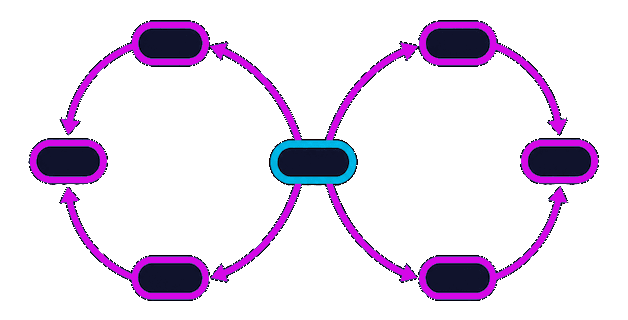
Statewright is a guardrail layer for AI coding agents that uses explicit state machines to control what an agent can do at each stage of a workflow. Instead of relying only on prompt instructions, teams can model phases such as plan, implement, test, and review, then constrain tool access for clients like Claude Code, Codex, Cursor, opencode, and related MCP workflows.

AI agent safety SDK with guard, redact, and scan modules
Superagent is an open-source AI agent safety SDK that provides runtime protection through four modules: Guard for detecting prompt injections and unsafe tool calls, Redact for removing PII and secrets, Scan for analyzing repos against AI-targeted attacks, and Test for red-team evaluations. It works with any LLM provider and includes open-weight guard models from 0.6B to 4B parameters with 50-100ms latency for real-time protection.

AI framework for distributed vulnerability research
Taskflow Agent is an open-source MIT-licensed AI framework by GitHub Security Lab that automates vulnerability discovery through a three-stage pipeline: threat modeling, issue suggestion, and audit validation. It has discovered 91 confirmed vulnerabilities in major open-source projects including Outline and WooCommerce, using distributed community-powered security research coordinated by AI agents.

Trusted runtime environments for AI agents in production infrastructure
Teleport Beams provides cryptographically verified, policy-gated access for AI agents to interact with production infrastructure including servers, Kubernetes clusters, and databases. Launched at KubeCon EU 2026, Beams extends Teleport's zero-trust access platform with agent-specific runtime controls, audit trails, and policy enforcement to ensure AI agents operate within defined boundaries when deployed in production environments.

Terminal guardrail runtime and policy-as-code engine for AI coding agents
Tirith is an open-source terminal security and policy-as-code runtime for AI agents and developers. It intercepts shell commands in real time to block homograph attacks, pipe-to-shell exploits, dotfile tampering, and destructive executions.

Run and govern MCP servers across desktop, CLI and Kubernetes
Open-source MCP runtime and governance platform that runs servers in isolated containers, curates registries, enforces access policies, and operates gateways across desktop, CLI, and Kubernetes.

Open-source SOAR platform with AI-powered playbooks
Tracecat is a YC S24-backed open-source SOAR (Security Orchestration, Automation and Response) platform that lets security teams build AI-powered playbooks for automated incident response. It provides visual workflow builders for creating response procedures, integrates with common security tools, and handles alert triage, enrichment, and remediation — positioned as an open-source alternative to Tines and Splunk SOAR.

Agentic AI security posture management
Trent AI is a specialized security platform for agentic AI applications providing AI Security Posture Management that compounds with every development cycle. Scans, judges, mitigates, and evaluates AI agent security detecting threats traditional tools miss including prompt injection attacks, tool misuse, unintended autonomous actions, data exfiltration through agent chains, and privilege escalation. Offers continuous assessment with remediation plan execution through Claude Code.