
Agent Skills & Prompts
MCP servers, system prompts, agent frameworks, and orchestration tools
301 tools
last updated August 16, 2026
showing 48 of 301 tools

Pipecat
Open-source framework for real-time voice and multimodal AI agents
Pipecat is an open-source framework with 11,000+ GitHub stars for building real-time voice and multimodal AI agents. Developed by Daily.co, it manages the STT to LLM to TTS pipeline with sub-second latency, integrating with AWS Bedrock, NVIDIA NIM, and AssemblyAI for production-grade voice agent deployment.

Pipedream
Connect 2,800+ APIs for workflows and AI agents
Pipedream is a developer-focused workflow automation platform that connects over 2,800 APIs with managed OAuth and credential handling, letting teams build integrations using Node.js, Python, Go, or Bash alongside a visual no-code builder. Its MCP server exposes 10,000+ pre-built tools to AI agents for direct API access through LangChain, CrewAI, and other frameworks. Pipedream is SOC 2 Type II and HIPAA compliant with credit-based pricing starting at a free tier of 100 credits per month.
Playwright MCP
Microsoft's MCP server for structured browser automation by AI agents
Playwright MCP is Microsoft's Model Context Protocol server that enables AI agents to automate web browsers through structured tool calls. It exposes Playwright's browser automation capabilities as MCP tools for navigation, clicks, forms, extraction, and screenshots. The Microsoft-maintained repo has 30K+ GitHub stars and is a durable default for structured browser interaction in agent workflows.

PraisonAI
Low-code multi-agent framework with chat integrations
PraisonAI is an open-source low-code multi-agent framework with 6K+ GitHub stars for building AI agent teams through simple YAML configuration. Define agent roles, goals, and tools in YAML and PraisonAI handles orchestration. Features built-in integrations with WhatsApp, Telegram, Discord, and Slack for deploying conversational agents. Supports both CrewAI and AutoGen as backend orchestrators, RAG capabilities, and a web UI for monitoring agent interactions in real-time.
Prompt Flow
Build and evaluate LLM apps end-to-end
Prompt Flow is Microsoft's open-source development suite for building, testing, evaluating, and deploying LLM-based applications end-to-end. It links LLM calls, prompts, Python code, and other tools into executable flows defined in YAML, with a VS Code extension providing a visual flow designer. The tool supports tracing LLM interactions for debugging, running batch evaluations with quality metrics against larger datasets, and integrating tests into CI/CD pipelines before production deployment.
QMD
On-device hybrid search engine for your docs and notes
QMD is an on-device search engine built by Tobi Lütke (Shopify CEO) that indexes markdown notes, meeting transcripts, and documentation locally. It combines BM25 full-text search, vector semantic search, and LLM-powered re-ranking into a single hybrid pipeline. Ships with a built-in MCP server for seamless integration with Claude Code, Cursor, and other AI editors. All processing happens on your machine via node-llama-cpp with GGUF models — zero cloud dependency.

R2R
Production RAG engine with hybrid search and knowledge graphs
R2R is a production-grade RAG engine from SciPhi AI that combines hybrid search with knowledge graph extraction and agentic retrieval capabilities. It provides a complete pipeline from document ingestion through retrieval and generation, supporting vector, keyword, and graph-based search strategies. The managed API and self-hosted options make it accessible for both rapid prototyping and production deployments requiring advanced retrieval beyond simple vector similarity.
RAG-Anything
All-in-one multimodal RAG framework
RAG-Anything is an all-in-one multimodal RAG framework from the University of Hong Kong that processes text, images, tables, and equations through a unified pipeline built on LightRAG. It constructs multi-modal knowledge graphs by extracting multimodal entities and establishing cross-modal relationships. The VLM-Enhanced Query mode integrates visual content into large language models for deeper document understanding beyond plain text retrieval.

RAGFlow
Deep document understanding RAG engine
RAGFlow is an open-source RAG engine with 76K+ GitHub stars that provides deep document understanding for building knowledge-based AI applications. Optimizes chunking for 20+ document types including PDFs, Word docs, presentations, and images using layout-aware parsing. Features template-based chunking strategies, citation with source references, multi-recall retrieval combining keyword and semantic search, and a visual knowledge base management interface with drag-and-drop document upload.

Re_gent
Version control for AI coding-agent actions
Re_gent is an open-source version-control layer for AI coding-agent activity. Instead of only reviewing the final Git diff, it records what the agent attempted, changed, and executed along the way so teams can trace, undo, and govern autonomous coding work. It fits Claude Code, Codex, Cursor, and multi-agent teams that need an audit trail between prompt and pull request.

Restate
Durable execution engine for workflows and AI agents
Restate is a durable execution engine that provides reliable workflow orchestration for AI agents and backend services. It runs as a single binary with no external dependencies, delivering sub-50ms latency and 94K+ actions per second. Supports TypeScript, Python, Go, Java, and Kotlin SDKs with built-in retries, sagas, and virtual object state. MIT licensed with 3,700+ GitHub stars.
Rig
Build modular, scalable LLM applications in Rust
Open-source Rust library for building scalable, modular, and ergonomic LLM-powered applications. Rig unifies 20+ model providers (OpenAI, Anthropic, Mistral, DeepSeek, Ollama, and more) and 10+ vector stores behind one trait-based interface, supports completion and embedding workflows, multi-turn streaming, and transcription/audio/image generation, with full GenAI Semantic Convention compatibility and WASM-ready core library — production agentic infra for Rust teams.
Rivet
Visual AI agent builder by Ironclad
Rivet is an open-source visual AI programming environment and TypeScript library by Ironclad for building, debugging, and deploying AI agents through a node-based graph editor. Complex LLM prompt chains become visual networks with real-time data flow inspection at every node, team collaboration on agent graphs, and a TypeScript library for embedding finished graphs in any application. Transforms agent development from text-editing into visual engineering.

Rowboat
Open-source AI coworker with persistent memory and tool use
Rowboat is an open-source AI coworker platform that provides persistent memory, tool use, and multi-agent orchestration in a chat-based interface. It enables teams to build AI assistants that remember context across sessions, access internal tools and databases, and coordinate specialized sub-agents for complex workflows. Over 9,300 GitHub stars.

Safari MCP Server
Apple's Safari-native MCP server for web debugging agents
Safari MCP Server is Apple's safaridriver-based MCP server in Safari Technology Preview, giving compatible coding agents local access to Safari page content, console logs, network requests, screenshots, JavaScript evaluation, interactions, viewport controls, and accessibility/performance checks.

Sakana Fugu
Multi-agent model API that orchestrates frontier models behind one OpenAI-compatible endpoint
Sakana Fugu is a hosted model-provider API that exposes a learned multi-agent system as one OpenAI-compatible model. It dynamically routes coding, code review, research, and reasoning tasks across a frontier-model pool, with Fugu for lower-latency work and Fugu Ultra for harder workloads where answer quality matters more than cost or speed.

ScrapeGraphAI
LLM-powered web scraping with graph-based extraction pipelines
ScrapeGraphAI is a Python library that uses LLMs and graph-based logic to build automated, self-healing web scraping pipelines. Developers describe desired data in natural language and ScrapeGraphAI constructs a processing graph that extracts structured information from any website. It supports multiple LLM providers, achieves 96%+ accuracy on semantic extraction benchmarks, and adapts to layout changes automatically. Over 20,000 GitHub stars.
Semantic Kernel
Microsoft's AI orchestration SDK for .NET, Python, and Java
Microsoft's open-source AI SDK that lets you combine AI models with conventional programming. Supports plugins, planners, memory, and function calling with availability for .NET, Python, and Java. Designed for enterprise developers building AI-powered applications within the Microsoft ecosystem, offering deep integration with Azure AI services and existing business logic.

Sim
Visual agent builder with 1000+ integrations
Sim is an open-source platform for building, deploying, and orchestrating AI agents with a visual workflow editor. Connects 1,000+ integrations and LLMs with drag-and-drop canvas design, AI-assisted Copilot for generating nodes from natural language, and built-in knowledge base for RAG. Trusted by 100K+ builders. Includes 11 pre-built workflow templates for quick deployment.
Smithery CLI
Package manager for MCP servers and agent skills
Smithery is a CLI tool and registry for discovering, installing, and managing MCP servers and agent skills. It lets developers search thousands of available servers, install them with one command, inspect available tools, and connect their AI coding agents to external capabilities through the Model Context Protocol standard.

SmoLAgents
Hugging Face's lightweight agent framework
smolagents is Hugging Face's lightweight agent framework for building AI agents that can use tools, write and execute code, and collaborate in multi-agent setups. Designed for simplicity with minimal abstractions — agents are just LLMs that write Python code to orchestrate tool calls rather than using JSON-based function calling. Supports any LLM provider, integrates with Hugging Face Hub for sharing tools and agents, and runs with as few as 1,000 lines of core library code.

Sourcebot
Self-hosted code understanding for humans and agents
Sourcebot is a self-hosted code intelligence platform that helps developers and AI agents understand large codebases through intelligent search, navigation, and inline-cited answers. Deployed as a Docker container with MCP server support, it indexes thousands of repositories without source code leaving your infrastructure.

Spec Kit
Toolkit for spec-driven development with AI
GitHub's official toolkit for spec-driven development. Write specifications in natural language and let AI coding agents implement them with structure, consistency, and traceability. Bridges the gap between product requirements and AI-generated code by providing a standardized format that agents can follow reliably across complex projects.

Spring AI Alibaba
Alibaba's Spring framework for building AI applications in Java
Spring AI Alibaba is Alibaba's open-source framework that brings AI capabilities to Java Spring Boot applications. It provides auto-configuration for AI model providers, RAG pipeline components, agent frameworks, and tool integration following Spring conventions. With 9,100 GitHub stars and 220+ contributors, it is the most mature AI framework for Java enterprise developers building production AI features.
Statewright
State-machine guardrails for controlling which tools AI coding agents can use at each phase.
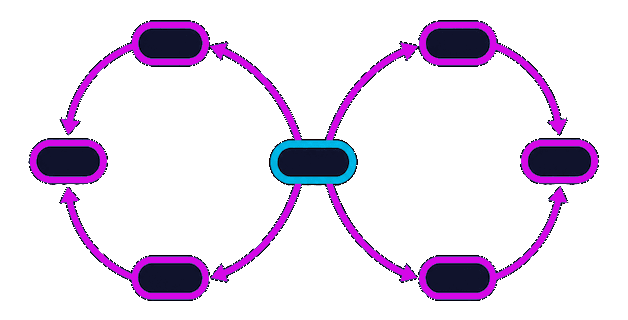
Statewright is a guardrail layer for AI coding agents that uses explicit state machines to control what an agent can do at each stage of a workflow. Instead of relying only on prompt instructions, teams can model phases such as plan, implement, test, and review, then constrain tool access for clients like Claude Code, Codex, Cursor, opencode, and related MCP workflows.
Steel
Open-source browser infrastructure for AI agents at scale
Steel is an open-source browser API purpose-built for AI agents, providing managed headless browser sessions with anti-bot bypass, proxy rotation, CAPTCHA solving, and session persistence. It handles the infrastructure layer that browser automation agents like Browser Use and Stagehand run on top of. Self-hostable or available as a cloud service. Over 6,000 GitHub stars.

Strands Agents SDK
AWS open-source SDK for building model-driven AI agents
Strands Agents is an open-source SDK from AWS that takes a model-driven approach to building AI agents. Developers define a prompt, model, and tools, and the LLM handles planning and orchestration autonomously. Supports Amazon Bedrock, Anthropic, OpenAI, Gemini, Ollama, and more. Powers Amazon Q Developer and AWS Glue in production. Available in Python and TypeScript with native MCP support.
Suna
Open-source generalist AI agent for browser and code tasks
Suna is an open-source generalist AI agent that can autonomously browse the web, write and execute code, manage files, and interact with external services. It features a real-time browser automation engine, an isolated code execution sandbox, and integrations with popular APIs. Designed as an open-source alternative to commercial AI agent platforms. Over 9,000 GitHub stars with rapid community growth.

Superserve
Open-source Firecracker sandboxes for long-running AI agents
Superserve is an open-source sandbox infrastructure layer for AI agents that need durable computers instead of short-lived shells. It runs isolated Firecracker microVMs, supports pause, resume, snapshot, fork, preview URLs, MCP connectivity, SDK/API control, Docker workloads, and self-hosting, while the hosted service adds pay-as-you-go agent sandboxes for teams.

Supervision
Reusable computer vision tools for developers
Supervision is an open-source Python toolkit by Roboflow providing reusable CV utilities for detection, tracking, annotation, and dataset management. It works with any model including YOLO and Hugging Face via a standardized Detections class. Features include 20+ annotators, ByteTrack object tracking, zone counting, speed estimation, and dataset conversion between COCO, YOLO, and Pascal VOC formats.

Swarms
Multi-agent orchestration with 10+ swarm patterns
Swarms is an enterprise-grade multi-agent orchestration framework with 6,100+ GitHub stars that provides 10+ swarm patterns including sequential, concurrent, hierarchical, mixture-of-agents, and graph-based workflows. The SwarmRouter lets teams switch between orchestration strategies by changing a single parameter. It supports MCP for tool integration, multi-model providers via Anthropic, OpenAI, and local models, and includes an AutoSwarmBuilder that generates agents from task descriptions.

Tabstack
Mozilla-backed browser infrastructure for AI agents
Tabstack is Mozilla's browser infrastructure service for AI agents, providing clean markdown extraction, structured JSON data, and automated browser actions through a fast API. With two-tier fetch escalation that achieves sub-600ms latency for static pages, robots.txt compliance, and ephemeral data handling, it offers an ethical alternative to aggressive web scraping tools — complete with an MCP server for Claude and Cursor integration.

TaskWeaver
Code-first agent framework for data analytics tasks
TaskWeaver is Microsoft's open-source code-first agent framework that converts natural language requests into executable Python code for data analytics and workflow automation. Unlike text-based agent frameworks, it preserves rich in-memory data structures like DataFrames across conversation turns, supports custom algorithm plugins as callable functions, and verifies generated code before execution. It includes a Planner for task decomposition and a Code Interpreter for generation and execution.

Tavily
Real-time search API built for AI agents
Tavily is an AI-native search API that provides real-time web search, content extraction, and crawling capabilities specifically designed for LLM applications and autonomous agents. It returns structured, citation-ready results optimized for RAG workflows with built-in safety features including prompt injection protection and PII leak prevention. Acquired by Nebius in 2026, Tavily integrates with LangChain, LlamaIndex, and major agent frameworks, serving over one million developers worldwide.

ToolHive
Run and govern MCP servers across desktop, CLI and Kubernetes
Open-source MCP runtime and governance platform that runs servers in isolated containers, curates registries, enforces access policies, and operates gateways across desktop, CLI, and Kubernetes.

Toolhouse
Tool infrastructure for AI agents
Cloud platform providing optimized tools for AI agents with a universal SDK for Python and TypeScript. Works with any LLM provider and enables one-line tool integration. Handles authentication, rate limiting, and caching for external APIs so agent developers can focus on logic rather than plumbing, dramatically reducing the boilerplate needed for production agents.
TraceRoot
Open-source observability and self-healing layer for AI agents
TraceRoot is a YC S25-backed open-source observability platform purpose-built for AI agents and LLM apps. It combines OpenTelemetry-compatible tracing with an agentic debugging runtime that reads your source code, correlates failures with recent commits, and proposes fix PRs automatically. BYOK support spans seven LLM providers; the entire stack runs self-hosted via Docker Compose, with TraceRoot Cloud available for managed deployments.

Trent AI
Agentic AI security posture management
Trent AI is a specialized security platform for agentic AI applications providing AI Security Posture Management that compounds with every development cycle. Scans, judges, mitigates, and evaluates AI agent security detecting threats traditional tools miss including prompt injection attacks, tool misuse, unintended autonomous actions, data exfiltration through agent chains, and privilege escalation. Offers continuous assessment with remediation plan execution through Claude Code.
Twill AI
Autonomous coding agents that ship while you sleep
Twill is an autonomous coding agent platform that implements features, fixes bugs, and ships pull requests without manual intervention. Uses structured workflow of research, planning, human review, implementation in isolated sandbox, AI code review, then merge. Supports custom agent configurations with multiple LLM providers, isolated dev environments for verification, and integrations with GitHub, Linear, Sentry, Notion, and cloud platforms for end-to-end engineering automation.
UI-TARS Desktop
ByteDance's open-source multimodal desktop agent with vision-based GUI automation
UI-TARS Desktop is ByteDance's open-source multimodal AI agent that automates desktop and browser interactions using computer vision rather than DOM selectors or accessibility APIs. Powered by the UI-TARS vision model, it can understand and operate any graphical interface by looking at screenshots, making it capable of automating applications that traditional browser automation tools cannot reach, including native desktop apps and complex web UIs.

Unabyss
MCP-native personal context vault for keeping AI agents aligned with your work, voice, and projects.
Unabyss is a personal context headquarters for AI agents. It syncs sources such as email, Slack, Notion, Drive, meetings, and professional profiles into structured context files that can be served to MCP-capable clients. The strongest angle is not generic note taking; it is permissioned, reusable context for Claude, Cursor, custom agents, and other tools that otherwise need the same background explained repeatedly.

Upsonic
Agent framework with native MCP server support
Upsonic is an agent framework designed for building reliable AI agents with native Model Context Protocol (MCP) server support. It provides structured task execution, tool calling orchestration, and built-in reliability patterns for production agent deployments. Features include automatic error recovery, structured output validation, and seamless integration with MCP-compatible tools and data sources for enterprise agentic workflows.

VoltAgent
TypeScript-first AI agent framework with built-in observability
VoltAgent is an open-source TypeScript AI agent framework with built-in observability, RAG support, memory management, and MCP integration. It provides a structured approach to building production AI agents in the Node.js ecosystem with agent debugging tools, sub-agent orchestration, and tool management. Over 7,000 GitHub stars and 150K+ weekly npm downloads.

WeKnora
Enterprise RAG framework by Tencent
WeKnora is a Tencent-developed LLM-powered knowledge management and Q&A framework for enterprise document understanding and semantic retrieval. Supports 10+ document formats including PDF, Word, Excel, and images with seamless IM platform integration for WeCom, Feishu, Slack, and Telegram. Offers Quick Q&A mode using RAG pipelines and Intelligent Reasoning mode with ReACT agents for complex multi-step reasoning tasks across organizational knowledge bases.
XcodeBuildMCP
Sentry-maintained MCP server and CLI for Xcode builds, simulators, and tests
XcodeBuildMCP is a Sentry-maintained, MIT-licensed MCP server and CLI for agent-assisted iOS and macOS development. It lets MCP-compatible coding agents run Xcode build and test workflows, manage simulators, inspect failures, and work through Homebrew, npm, or on-demand client configuration, with documented Sentry telemetry controls for teams that need an opt-out.
Zep
Context engineering platform for AI agents with temporal knowledge graphs
Zep is a context engineering platform that assembles relationship-aware context for AI agents from conversations, business data, documents, and events. It maintains a temporal knowledge graph that automatically extracts entities and relationships, tracking how context evolves over time. Zep delivers formatted context blocks optimized for LLMs with sub-200ms latency, integrating with LangChain, LlamaIndex, AutoGen, and Google ADK through Python, TypeScript, and Go SDKs.
adk-go
Google's official Agent Development Kit for building AI agents in Go
adk-go is Google's official Agent Development Kit for the Go programming language, providing the tools and abstractions needed to build production AI agents. It supports tool calling, multi-turn conversations, structured outputs, and integration with Google's Gemini models. With 7,300 GitHub stars and Apache 2.0 license, it brings first-class AI agent development capabilities to the Go ecosystem.

agentOS
Lightweight OS for running AI agents in-process
agentOS is a portable open-source operating system for AI agents that delivers ~6ms cold starts at 32x lower cost than traditional sandboxes. Powered by WebAssembly and V8 isolates, it runs agents like Claude Code and Codex directly inside your process with granular permissions and host-managed tool access for S3, GitHub, and databases. Available as a simple npm package with no special infrastructure or vendor lock-in required.