
Explore / Category guide
Agent Frameworks
Discover the top Agent Frameworks in 2026. Compare architecture, pricing tiers, performance benchmarks, and open-source developer alternatives.
Category overviewAbout Agent FrameworksRead guideClose guide
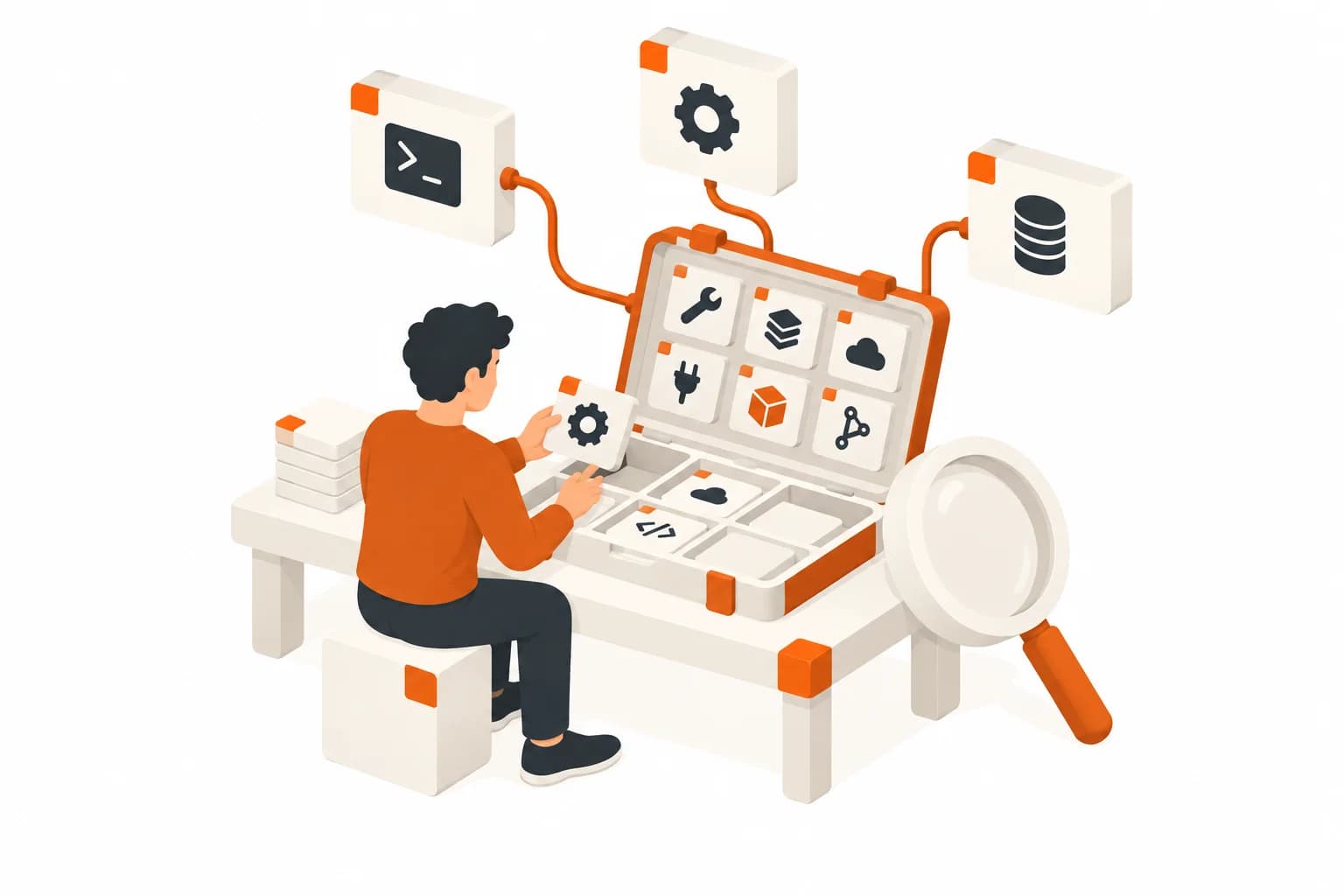
An agent framework is the library you build an LLM application with — it owns control flow, state, tool dispatch and retries so you are not hand-rolling a while-loop around a chat completion. You need one the moment your feature has to make several model calls in sequence, remember what happened between them, and recover when step four throws.
Most of these entries are not direct competitors. Almost all of the choice collapses into two questions, and neither is answered by a feature table.
The first is what shape your control flow actually has. If it branches, pauses for a human, and has to survive a process restart, you want an explicit graph with checkpointing — LangGraph, which scores 86 in LangGraph, is built around exactly that model. If the work decomposes into roles that hand off to each other, CrewAI's role abstraction (81, CrewAI) is a shorter path. If what you need is a typed function that returns validated structured output, Pydantic AI (85) is closer to ordinary Python than either.
The second question is which layer you are missing, because a third of this category does not compete with the orchestrators at all. Mem0 (88) is a memory store. E2B (87) is a Firecracker sandbox for running model-written code. Browser Use (85, MIT) and Stagehand (85) give an agent a browser. LlamaIndex (87) is retrieval and document parsing first, orchestration second. Adding one of these to a framework you already have is usually the right move; replacing your framework to get one is not.
Two things are worth carrying into the decision. Most tools here are open source, so by default you can read the control loop before you depend on it. And most do not yet carry a scored review, so a card without a score has not been assessed yet; it has not scored badly.
The lifecycle event that defines this category in 2026 is the end of the managed-thread era. OpenAI's Assistants API shut down on 26 August 2026, and OpenAI's own migration guidance points to the Responses API and the Agents SDK. Retired tools are not shown in the list below.
Start from the shape of your control flow, then check whether you need a framework at all or just a layer.
showing 48 of 165 tools

Persistent AI teammates for cross-app work
Grok Bot is SpaceXAI's beta workspace for persistent AI teammates that use apps, websites, files, terminals, plugins, and MCP on a user-scoped cloud computer. Bots can learn routines, coordinate in parallel, and, when enabled by team policy, launch Cursor Cloud Agents that work on code in isolated environments and return pull requests and verification artifacts.

Sentry-style observability for AI agent conversations
Latitude is an agent observability platform for teams that need to inspect LLM traces, conversations, issues, and evaluation feedback in one workflow. Its public repo and docs position it as a Sentry-style monitor for AI agents, with semantic search, issue detection, annotations, MCP-assisted fixes, and cloud or self-hosted deployment paths for production debugging.

Open-source post-building layer for agents — tracing, evals, and online monitoring
Judgeval is the open-source post-building layer for AI agents from Judgment Labs, providing OpenTelemetry-based tracing, hosted and custom evaluation scorers, and online behavior monitoring for LLM-powered applications. Instrument any function with a single decorator, score live production traffic against faithfulness and instruction-adherence checks, and feed real-world failures back into reinforcement learning or supervised fine-tuning loops.
Intelligent memory layer for AI agents and assistants
Mem0 is an open-source intelligent memory layer for AI agents with 51K+ GitHub stars providing persistent, adaptive memory across sessions. It manages working, short-term, and long-term memory types, enabling personalized AI experiences that improve over time. Features automatic memory extraction from conversations, semantic search over stored memories, multi-format support, and integration with 100+ frameworks. Simple API for adding memory to any LLM-powered application or agent.

Official Chrome DevTools MCP server for coding agents
chrome-devtools-mcp is the Chrome DevTools team's official MCP server that lets coding agents control and inspect a live Chrome browser with first-party Chrome DevTools Protocol fidelity. It exposes Network inspection, Performance traces, Lighthouse audits, console output, and structured DOM snapshots as typed MCP tools, so agents can debug real pages and ship reliable web performance investigations without resorting to brittle DOM scraping.

Secure cloud sandboxes for AI agents
E2B provides secure cloud sandboxes that let AI agents execute code, run terminal commands, and interact with filesystems in isolated environments. Each sandbox spins up in ~150ms with its own OS, giving agents a safe space to run untrusted code. Supports Python, JavaScript, and any language via custom Dockerfiles. Used by AI coding assistants, data analysis agents, and code interpreters. SDK available for Python and JavaScript with a simple API for programmatic sandbox control.
Data framework for LLM applications
Leading Python framework for building LLM-powered applications with focus on data-aware and agentic workflows. Provides tools for RAG (Retrieval-Augmented Generation), document indexing, vector store integrations, query engines, and multi-agent orchestration. 150+ data connectors for various sources. Works with OpenAI, Anthropic, local models, and more. Includes LlamaHub for community tools and LlamaCloud for managed RAG pipelines. 50K+ GitHub stars.
LangChain CLI for maintaining agent-friendly codebase documentation
OpenWiki is LangChain’s open-source CLI for generating and maintaining an agent-focused wiki inside a codebase. It can create an openwiki/ documentation folder, update it from repository changes, add guidance to AGENTS.md or CLAUDE.md, and run via an interactive CLI or daily GitHub Action so coding agents have durable context without stuffing every detail into prompts.

Memory engine and context API for AI assistants
Supermemory is a memory and context platform for AI assistants and agents. It ranks #1 on LongMemEval, LoCoMo, and ConvoMem, supports MCP for Claude/Cursor-style clients, provides plugins for developer tools, and combines memory extraction, user profiles, hybrid search, connectors, and RAG in one API.
Build AI-powered web apps
Open-source TypeScript toolkit by Vercel for building AI-powered apps with streaming chat UIs, structured outputs, tool calling, and agent workflows. Framework-agnostic core with integrations for React, Next.js, Svelte, Vue, and Nuxt. Supports a broad AI SDK v6 provider catalog including OpenAI, Anthropic, Google, xAI, Mistral, Bedrock, Groq, and OpenAI-compatible providers. Includes useChat and useCompletion hooks for rapid UI development. The standard SDK for adding AI features to web apps.

Open-source sandboxes and SDKs for AI agents that control desktops
Open-source computer-use infrastructure for agents that need to drive desktop environments in the background. CUA includes Cua Driver, Sandbox, Run, Bench, and Verified Data across Linux, Windows, macOS, and Android, with MCP and CLI surfaces for screenshots, accessibility trees, keyboard/mouse actions, shell commands, task evaluation, and fleet execution.

Stateful agent orchestration framework by LangChain
LangGraph is LangChain's framework for building stateful, multi-actor AI agent applications as controllable graphs. It models workflows as nodes and edges, enabling cycles, branching, and human-in-the-loop patterns that simple chains cannot express. Features built-in persistence for conversation memory, streaming support, and fault tolerance. Provides fine-grained control over execution flow while supporting single-agent and multi-agent architectures with shared or independent state.

TypeScript AI agent framework
TypeScript-native framework for building AI agents and workflows with great developer experience. Provides primitives for agents with tool calling, RAG pipelines, workflow orchestration with branching/parallel steps, and integration connectors. First-class TypeScript support with type-safe tool definitions. Local dev server with playground UI for testing. Growing as a LangChain alternative for TypeScript developers building AI apps.
Modular graph-based RAG pipeline using hierarchical knowledge graph community summaries
Microsoft GraphRAG is an open-source retrieval framework that transforms unstructured text into structured knowledge graphs, clusters entities hierarchically using the Leiden algorithm, and generates dataset-wide summaries alongside entity-level local search for multi-hop reasoning.

Command center for Claude Code and Codex — monitor, steer, and voice-control your AI agents from any device.
Omnara is a command center for Claude Code and Codex sessions across desktop, web, mobile, and Apple Watch. Its public site supports cross-device supervision, parallel agents, worktrees, Git, and session-continuity language, with free-offer metadata; teams should verify detailed pricing, relay, privacy, and enterprise controls before standardizing it.

Official Python SDK for OpenAI agents
OpenAI's Python framework for building multi-agent AI applications with GPT models. Provides primitives for creating agents with tool calling, handoffs between specialized agents, guardrails for input/output validation, and tracing for observability. Supports building complex workflows where agents collaborate on tasks. Includes built-in tools for file search, code execution, and web browsing. Designed for production agent systems with structured output and error recovery patterns.

Workflow automation with AI nodes
n8n is a source-available workflow automation platform for connecting apps, APIs, data, and AI models through visual workflows and code. It supports self-hosted deployments and n8n Cloud, with integrations across communication, databases, CRM, project management, and model providers. Teams can combine deterministic automation with AI-powered steps and agent workflows while retaining control over deployment and data.

AI agent framework for web browser automation
Browser Use is an open-source AI agent framework with 99K+ GitHub stars enabling LLMs to control web browsers via natural language. Y Combinator-backed, it lets agents navigate sites, fill forms, extract data, and complete multi-step tasks autonomously. Built on Playwright with vision-based element detection, multi-tab management, cookie persistence, and self-correcting actions. Supports OpenAI, Anthropic, and local models with a simple Python API for building custom browser agents.

Python agent framework by Pydantic team
Agent framework built on Pydantic for type-safe AI applications. Provides structured outputs, dependency injection, and multi-model support. Created by the Pydantic team, it brings the same validation and typing philosophy that made Pydantic essential for Python APIs to the world of AI agents, ensuring reliable data flow between LLMs and application logic.

AI-powered web browser automation with Playwright
Stagehand is an open-source browser-agent SDK from Browserbase that combines deterministic browser automation with AI primitives such as act(), extract(), observe(), and agent(). Instead of relying only on brittle selectors, developers can use natural-language actions, Zod-backed structured extraction, page observation, action caching, and Browserbase cloud-browser infrastructure for production web automation.

Microsoft’s public-preview runtime governance toolkit for policy, identity, sandboxing, audit, and MCP security around AI agents.
Agent Governance Toolkit is Microsoft’s MIT-licensed public-preview toolkit for governing AI agent runtimes. It adds policy enforcement, zero-trust identity, execution sandboxing, audit, reliability, and MCP security-gateway patterns around tool calls and autonomous actions, helping platform teams move beyond prompt-only guardrails while preserving architecture review requirements.

Headless browser cloud built for AI agents
Browserbase is cloud infrastructure that runs headless Chromium browsers on demand for AI agents and automation workflows, exposing Playwright, Puppeteer, and Selenium endpoints with built-in session replay, residential proxies, CAPTCHA solving, and stealth fingerprints. It also hosts Stagehand and a Model Gateway, letting teams build browser-using agents without maintaining their own fleet of Kubernetes-managed Chromium instances.
Codebase knowledge graph MCP server for AI coding agents
Codebase Memory MCP is an MIT-licensed MCP server that turns a repository into a persistent code knowledge graph for AI coding agents. It gives Claude Code, Cursor, Codex-style agents, and other MCP clients structural queries for functions, classes, call chains, routes, and architecture, helping them explore large projects without repeatedly rereading files or relying only on broad search.

AI IDE and collaboration platform for BYOK coding agents
HumanLayer is an AI IDE and collaboration platform for software-factory workflows with coding agents. Current positioning emphasizes tasks, artifacts, worktrees, multi-agent sessions, and BYOK Claude/Codex/API subscriptions rather than only human approval gates. Treat public code and product terms separately when evaluating open-source claims.

Always-on cloud engineer that lives in Slack and ships verified PRs
Roomote is a Slack-first cloud coding agent from RooCodeInc that takes prompts end-to-end across GitHub, Linear, Notion, Sentry, and your own dev environment, then opens self-verified pull requests for review. It is the team behind 24K+ star Roo Code going all-in on cloud agents: mention it in Slack, let it run in an isolated environment, and review the PR through your normal GitHub flow.

Accessibility-tree desktop automation engine for deterministic native-app control
agent-desktop is a Rust-native desktop automation engine for AI agents that need structured control of native applications without relying only on screenshots or pixel loops. It exposes accessibility-tree snapshots, stable element references, progressive traversal, and action primitives that can let coding agents and automation stacks operate on Windows, macOS, Electron, and legacy interfaces with lower token cost and better repeatability than pure vision control.

Build and deploy AI chatbots and agents visually
Botpress is a conversational AI platform founded in 2017 that combines a visual Agent Studio with LLM-native architecture for building chatbots and autonomous agents. It offers a drag-and-drop flow builder, knowledge base indexing from documents and websites, an Autonomous Engine for generative AI workflows, and deployment across web chat, WhatsApp, Telegram, Slack, and other channels. Botpress runs as a cloud SaaS or self-hosted via Docker with pricing starting at $0/month pay-as-you-go.

Source-available LLM app development platform
Source-available LLM application development platform combining a visual no-code canvas with backend capabilities for building AI workflows, RAG pipelines, and agent systems from prototype to production. Integrates hundreds of models from dozens of providers, with PDF/PPT ingestion, ReAct agents with 50+ tool integrations, and multi-step orchestration. Used by both technical and non-technical teams to ship GenAI apps like chatbots and Q&A systems.
Context compression for LLM apps and coding agents
Headroom is an Apache-2.0 context compression layer for LLM apps and coding agents. It compresses tool output, logs, files, RAG chunks, and agent history through a local library, proxy, wrapper, or MCP server, with retrieval hooks for bringing originals back when needed. Treat its savings numbers as Headroom-reported benchmarks, not independent aicoolies measurements.

Knowledge graph-powered RAG framework from HKU
LightRAG is a research-backed RAG framework from Hong Kong University that combines knowledge graph structures with vector search for more contextual retrieval. Published at EMNLP 2025, it extracts entities and relationships from documents to build a structured knowledge graph, then uses dual-level retrieval across both graph and vector representations with five query modes: naive, local, global, hybrid, and mix.
MCP, ACP and Skills support for building production coding agents — interactive or automated.
fast-agent is an Apache-licensed Python framework for building and running LLM agents with full MCP (Model Context Protocol) and ACP support. It ships with an interactive shell mode, Skills management, and multi-model routing — making it a practical platform for coding agents, workflow automation, and agent evaluation across Claude, Codex, HuggingFace, and local models.

Lightweight multi-modal agent framework
Fast, lightweight Python framework for building multi-modal AI agents, formerly known as Phidata. Includes built-in memory, knowledge bases, tools, and reasoning capabilities with 40K+ GitHub stars. Designed for developers who want to build production-ready agents quickly with minimal boilerplate, supporting structured outputs and multi-agent coordination out of the box.

Rust-native multi-agent orchestration for production
GraphBit is a Rust-native, multi-agent orchestration framework built for production. It targets the gap between Python-first frameworks like LangGraph and the operational expectations of enterprise systems — predictable memory, low latency, deterministic concurrency, and the ability to embed an agent runtime in services that already run Rust without dragging in a Python interpreter.
Production-grade browser automation with AI self-healing and Playwright code ownership
Intuned is a code-first browser automation platform that turns natural language prompts into production-ready Playwright code, deploys it, and self-heals it when target sites change. Supports TypeScript and Python with Anthropic Computer Use, OpenAI CUA, Stagehand, Browser-Use, and Gemini Computer Use integrations. Built-in stealth, captcha solving, auth session management, and scheduled runs with concurrency control. No vendor lock-in—you own the code.

Framework for LLM applications
The most widely-used framework for building LLM-powered applications, available in Python and JavaScript. Provides abstractions for chains, agents, RAG, memory, tool usage, and structured output. Integrates with 100+ LLM providers, vector stores, document loaders, and tools. LangSmith offers tracing and evaluation. LangGraph enables stateful, multi-agent workflows with cycles. 100K+ GitHub stars. The de facto standard for LLM application development despite growing alternatives like LlamaIndex.

Open-source personal AI agent for messaging apps
OpenClaw is a free, open-source AI agent framework that turns any LLM into an autonomous personal assistant accessible through messaging apps like WhatsApp, Telegram, Discord, and Signal. Running entirely on your local machine via a Node.js gateway, it connects AI models to system tools, browsers, files, and APIs for multi-step task execution with persistent memory across sessions.

Alibaba's agent framework built for the Qwen model family
Qwen-Agent is Alibaba's Apache-2.0 framework for building AI agents around the Qwen model family. It supports tool use, planning, memory, RAG, Code Interpreter, Browser Assistant, MCP extras, custom tools, and Qwen Chat backend patterns with Qwen3/Qwen3.5 examples. Best fit for teams standardizing on Qwen rather than a generic multi-agent router, with 16.5K+ GitHub stars.

Microsoft’s pytest-native red teaming framework for turning AI agent safety findings into CI tests.
RAMPART is an open-source Microsoft framework for safety and security testing of agentic AI applications. It brings red-team findings into a pytest-native workflow so teams can turn prompt injection, unsafe tool use, and behavioral boundary failures into repeatable regression tests. The strongest aicoolies angle is developer workflow: RAMPART makes agent safety part of CI/CD instead of a one-off security review.

No-code platform for building AI agent workforces
Relevance AI is a no-code platform from Sydney, Australia for building and deploying AI agent workforces that execute business workflows autonomously. Backed by a $24M Series B led by Bessemer Venture Partners, it offers 9,000+ integrations, a visual agent builder, a marketplace of pre-built agents, and multi-model support across OpenAI, Anthropic, and AWS Bedrock. Agents handle sales development, lead research, meeting prep, onboarding, and support workflows.

Multi-agent AI framework
Python framework for orchestrating autonomous AI agents that collaborate to accomplish complex tasks. Define agents with specific roles, goals, and backstories, then organize them into crews with sequential or parallel task execution. Supports tool usage (web search, file I/O, API calls), memory, delegation between agents, and human-in-the-loop input. Works with OpenAI, Anthropic, local models, and more. 25K+ GitHub stars. Leading multi-agent framework alongside LangGraph and AutoGen.
Open-source observability for AI agents
Laminar is an open-source observability platform for AI agents providing tracing, evaluation, and analytics for LLM applications. It integrates with Vercel AI SDK, LangChain, OpenAI, and Anthropic with a single line of code. Features include OpenTelemetry-native SDKs, an extensible evaluation framework with CI/CD support, SQL access to traces and metrics, and a visual debugging timeline for agent reasoning and actions.

The LLM anti-framework for typed AI apps
Mirascope is an open-source Python and TypeScript toolkit for building LLM applications that prioritizes type safety, composability, and 100% test coverage. Positioned as the 'anti-framework,' it provides fine-grained control over LLM interactions using familiar language constructs rather than rigid abstractions, supporting all major providers through a unified interface.
Microsoft's conversational multi-agent framework
AutoGen is an open-source programming framework from Microsoft Research for building AI agents and facilitating cooperation among multiple agents to solve complex tasks through multi-turn conversations. Pioneered conversable agents that interact, use tools, and involve humans in the loop for multi-agent workflows. v0.4 features a redesigned async event-driven architecture with stronger observability, flexible collaboration patterns, and reusable components.

Self-evolution engine for AI agents with auditable updates
Evolver is an open-source self-evolution engine for AI agents that turns run logs into auditable, reviewable updates via its Genome Evolution Protocol. Instead of ad hoc prompt tweaking, teams collect traces and Evolver proposes versioned diffs to prompts, tools and workflows that engineers can approve, reject or roll back like code.

Sandboxes for coding agents — Linux VMs, Git, and deploys in one box
Freestyle is YC-backed sandbox infrastructure built for AI coding agents, shipping secure Linux VMs with nested virtualization, Git servers, and one-click web deploys. It lets agents run real workloads, branch repos, and deploy apps under short-lived identities while billing only for active compute. Used in production by vly.ai, Rork, and Vibeflow.

Browser automation with AI vision — no XPath or DOM parsing needed
Skyvern automates browser-based workflows using LLMs and computer vision instead of brittle XPath or CSS selectors. It understands web pages visually, navigating forms, clicking buttons, and extracting data like a human would. Achieved 85.85% success rate on WebVoyager benchmark and SOTA on WRITE tasks for RPA. 21,000+ GitHub stars, AGPL-3.0 licensed. Skyvern Cloud offers managed usage-based hosting for teams that prefer not to self-host the infrastructure.
Drag-and-drop LLM flow builder
Flowise is an open-source, low-code UI and API platform for building customized LLM orchestration flows, multi-agent systems, and autonomous AI applications using drag-and-drop node graphs.

Self-evolving local computer agent with a reusable skill tree
GenericAgent is a minimal, self-evolving autonomous agent from a 3.3K-line seed and ~3K core loop that gives LLMs system-level control of a local computer. It writes files, runs shell commands, browses the web, and uses keyboard/mouse/screen/mobile tools, while skill crystallization saves successful runs into a reusable skill tree that cuts token cost on repeats.
Community tiers
A different perspective: rank the tools you know from S to D.
Sources & verification
- LF AI & Data Foundation - Generative AI Projects
- IEEE Technical Community on Scalable Computing (Agent Systems)
Verification dates are editorial checks. Routine CMS saves and automatic updatedAt timestamps do not advance them.