
Best tools for Cost Optimization
Choosing the most cost-effective AI tools, plans, and configurations
95 tools
listing data updated September 24, 2026 · not a verification date
showing 47 of 95 tools

AI subscription for all JetBrains IDEs
JetBrains AI Pro is the professional-tier subscription plan for JetBrains AI Assistant, providing enhanced AI capabilities within JetBrains IDEs beyond the free tier. It serves developers who require consistent, high-quality AI assistance throughout their daily workflow without hitting usage limits. AI Pro bridges the gap between the limited free tier and the premium AI Ultimate plan, offering expanded cloud AI credits at an accessible price.

Zero-markup credit subscription for 500+ AI models
Flexible AI coding credits: $19/mo ($28.5 in credits), $49/mo ($73.5 in credits), $199/mo ($298.5 in credits). Balance never expires and monthly bonus credits stack over time. Works across multiple AI coding agents and IDEs through a unified billing system, giving developers the freedom to use different tools without managing separate subscriptions.

Budget coding subscription by Moonshot AI
Kimi Coding Plan covers Moonshot AI's consumer subscription tiers and API pricing for accessing Kimi's AI coding capabilities, powered by the Kimi K2.5 model that scores 76.8% on SWE-Bench Verified. Includes a free Adagio tier with unlimited basic conversations, paid Andante and Presto tiers with higher K2.5 quotas, and pay-as-you-go platform API pricing for integrating Kimi into custom workflows.

Spec-driven coding subscriptions for Kiro IDE/CLI
Kiro Plans refers to the pricing and subscription structure for AWS's Kiro IDE, ranging from a perpetual free tier to enterprise-grade Power plans with varying levels of AI-assisted requests. Pricing distinguishes between two interaction types: spec requests initiated from structured task workflows, and vibe requests for chat-based coding assistance. Designed to scale from individual developers to professional teams building production software.

Input and output security scanners for LLM applications
LLM Guard is an open-source security toolkit by Protect AI that provides 15 input scanners and 20 output scanners to protect LLM applications from prompt injection, PII leakage, toxic content, secrets exposure, and data exfiltration. Each scanner is modular and independent — pick the ones you need, configure thresholds, and chain them into a pipeline. The library works with any LLM and has been downloaded over 2.5 million times. MIT licensed, Python 3.9+.
Engineering intelligence for DORA metrics and workflow automation
LinearB is a software engineering intelligence platform trusted by over 3,000 engineering leaders to track DORA metrics, cycle time broken into four phases (coding, pickup, review, deploy), and developer workflow patterns. It connects to Git repos and project management tools, benchmarks team performance against 8.1M+ pull requests from 4,800 organizations, and automates workflow improvements via gitStream — a policy-as-code engine for PR routing, labeling, and review automation.

Google's production on-device LLM inference framework
LiteRT-LM is Google's official open-source framework for running large language models on-device across Android, iOS, Web, Desktop, and Raspberry Pi. Already deployed in Chrome and Pixel hardware, it provides production-grade on-device LLM inference with 1.4K+ GitHub stars. Apache 2.0 licensed.

Smart LLM router that cuts inference costs up to 70%
Manifest is an open-source smart model router that intelligently routes LLM requests to the cheapest capable model, reducing inference costs by up to 70% without sacrificing output quality. It uses a 23-dimension scoring algorithm to evaluate 300+ models across providers including OpenAI, Anthropic, Google, and DeepSeek, with automatic fallbacks and budget controls. Manifest can be deployed as a cloud service, local plugin, or self-hosted Docker container with transparent routing logic.

Multi-model coding subscription by Minimax
The MiniMax Coding Plan is a subscription service providing developers with flat-rate access to MiniMax's AI models for coding tasks, with three monthly tiers designed to offer dramatically more value than per-token pricing from Anthropic or OpenAI. MiniMax positions its coding plans as delivering capacity equivalent to Claude Code Max at a fraction of the cost, making high-performance AI coding assistance accessible to a broader range of developers.

Disaggregated KV cache storage and transfer for LLM serving
Open-source infrastructure for disaggregated LLM serving that pools KV caches across prefill and decode workers, with high-performance transfer, distributed storage and integrations for vLLM and SGLang.

Distributed inference orchestration above vLLM, SGLang and TensorRT-LLM
Open-source, datacenter-scale orchestration layer that coordinates vLLM, SGLang and TensorRT-LLM across nodes with disaggregated serving, KV-aware routing, multi-tier cache management and automatic scaling.

Unified LLM API gateway and proxy hub
New API is an open-source multi-tenant AI gateway that aggregates and distributes LLM API requests across providers like OpenAI, Claude, and Gemini through a unified proxy interface. It cross-converts requests into OpenAI-compatible, Claude-compatible, or Gemini-compatible formats, with built-in channel management, quota control, token-based authentication, and billing capabilities. Deploy via Docker with SQLite or MySQL for centralized model management.
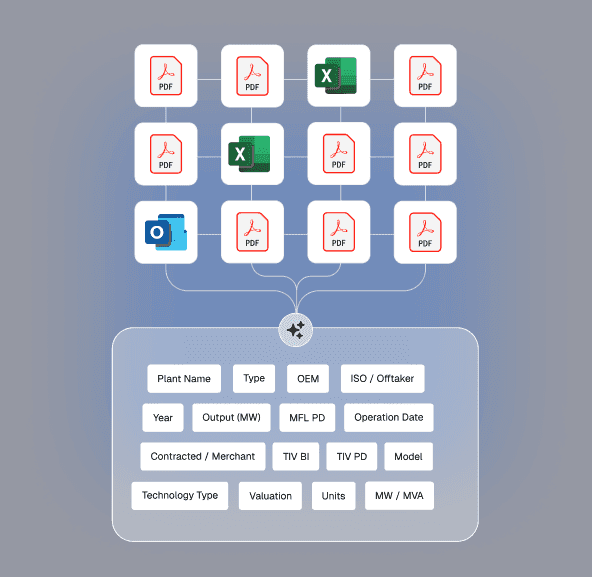
Autonomous AI red teaming with black-box attack simulation
Novee is an AI security platform that performs autonomous black-box red teaming of AI systems. It uses an advanced reasoning engine to simulate determined adversaries, probing for complex chained attack scenarios like prompt injection leading to database access through AI agents. Tests for jailbreaks, data extraction, unauthorized actions, and multi-step exploit chains in LLM applications.

Low-cost multi-model coding subscription
Budget-friendly AI coding plan featuring GLM-5, Kimi K2.5, and MiniMax M2.5/M2.7 models at $10/mo with a $12/5h usage cap. Hosted in US, EU, and Singapore for global low-latency access. Compatible with OpenCode and any OpenAI-compatible coding agent, offering an affordable alternative to premium API-based coding subscriptions.
Open-source Kubernetes cost monitoring (CNCF)
OpenCost is a CNCF-certified open-source tool for real-time Kubernetes cost monitoring that maps cloud spend directly to namespaces, deployments, pods, and labels. It provides granular cost allocation across teams and projects without vendor lock-in, supporting AWS, GCP, Azure, and on-premises clusters as the industry standard for open-source FinOps visibility in cloud-native environments.

Real-time usage metering and billing for AI, API, and DevOps products
OpenMeter is an Apache-2.0 open-source metering platform that ingests usage events, aggregates them into meters, and supports limits, entitlements, and usage-based billing. It fits AI, API, and DevOps products that need token-level reporting, customer usage visibility, or finance-ready chargeback data. Teams can self-host the core platform or evaluate OpenMeter's managed offering.

Cryptographic signing and verification for ML models
OpenSSF Model Signing is an open-source project for cryptographically signing and verifying machine learning model files to ensure integrity and provenance. Built on Sigstore PKI, it provides CLI tools and a Python library for signing model artifacts and verifying they haven't been tampered with. Part of the OpenSSF AI/ML Working Group, reaching v1.0 in 2025 for production supply chain security.

First commercially viable 1-bit LLMs that are 14x smaller and 8x faster
PrismML Bonsai delivers the first commercially viable 1-bit large language models with 8B, 4B, and 1.7B parameter variants. The 8B model runs in just 1GB of RAM versus 16GB for standard FP16 models, achieving 44 tokens per second on iPhone. Backed by $16.25M from Khosla Ventures and released under Apache 2.0, Bonsai makes capable LLMs practical for edge devices and resource-constrained environments.

Autonomous cloud discount management with ML
ProsperOps uses machine learning to continuously optimize cloud commitment coverage including Savings Plans and Reserved Instances, achieving Effective Savings Rates of 40% or more on AWS, GCP, and Azure. It provides autonomous discount management with a performance-based pricing model where ProsperOps shares a percentage of the savings generated, aligning costs with actual value delivered.

AI/ML supply chain security and model risk management
Protect AI is a YC-backed AI security company focused on ML supply chain protection. Its platform includes ModelScan for detecting malicious code in model files, Guardian for model repository security policies, and NB Defense for Jupyter notebook scanning. Advocates for SLSA-style supply chain standards for ML, helping organizations secure the full pipeline from training data to production model deployment.

AI group-buying for AWS cost reduction
Pump is a YC-backed platform that uses AI and group-buying power to automate AWS cost reduction, claiming up to 60% savings on compute through collective purchasing of Reserved Instances and Savings Plans. By pooling demand across multiple customers, Pump negotiates volume discounts that individual organizations cannot access, providing enterprise-level pricing to startups and mid-market companies.
DRM and IP protection for AI model weights
RefortifAI is a Y Combinator P2026 batch company that provides DRM and intellectual property protection for AI models by obfuscating model weights so they only run inside a hardened runtime. It solves the critical problem of model weight protection for companies distributing custom LLMs to untrusted environments, preventing IP theft while maintaining inference performance.

Intelligent model router that balances cost and quality across LLM providers
RouteLLM by LMSYS routes LLM requests to the most cost-effective model that can handle each query's complexity. It uses learned routing models to classify whether a query needs a powerful expensive model or can be handled by a cheaper alternative, reducing costs by up to 85% while maintaining quality. Supports OpenAI, Anthropic, and other providers through an OpenAI-compatible API.

Super-fast Rust-based JavaScript compiler
SWC is a super-fast JavaScript and TypeScript compiler written in Rust that serves as a drop-in replacement for Babel. It compiles modern JavaScript and TypeScript to backward-compatible versions up to 20x faster than Babel by leveraging Rust performance and parallelism. SWC handles JSX transformation, TypeScript stripping, module transpilation, and minification in a single tool, and powers major frameworks including Next.js, Parcel, and Deno.

Runtime guardrails validating AI agent actions before execution
Salus is a YC W26-backed platform that provides runtime guardrails for AI agents, validating actions before execution using policy-as-code defined in YAML, markdown, or plain English. It features evidence grounding for decision verification, structured feedback enabling 58% recovery rate when actions are blocked, plus PII detection, budget protection, and human-in-the-loop escalation. Agents with Salus follow policies at up to 60% lower cost with 52% reduced misalignment on frontier models.

Autonomous Kubernetes and GPU infrastructure optimization
ScaleOps provides autonomous real-time management of Kubernetes and GPU infrastructure, reducing cloud costs by up to 80 percent without manual configuration. Backed by 130 million in Series C funding at an 800 million dollar valuation, it serves enterprises including Adobe, Wiz, DocuSign, and Salesforce. The platform continuously rightsizes pods, optimizes replicas, manages nodes, and allocates GPUs based on live workload demand rather than static configurations.

Self-hosted UI and API for Ansible, Terraform, and scripts
Semaphore UI provides a web interface and REST API for running Ansible playbooks, Terraform and OpenTofu configurations, Bash scripts, and PowerShell commands from a centralized self-hosted platform. With over 13,000 GitHub stars and 2 million Docker pulls, it replaces AWX and manual terminal execution with a polished dashboard for scheduling, access control, notifications, and execution history across mixed infrastructure automation environments.

Run AI workloads on any cloud with automatic cost optimization
SkyPilot is an open-source framework for running LLMs, AI, and batch jobs on any cloud with automatic cost optimization. It supports AWS, GCP, Azure, Lambda Cloud, and more, automatically selecting the cheapest available GPUs and managing spot instance preemption. Features include multi-cloud job scheduling, managed spot jobs with automatic recovery, and cluster autoscaling with 6,000+ GitHub stars.

AI agent safety SDK with guard, redact, and scan modules
Superagent is an open-source AI agent safety SDK that provides runtime protection through four modules: Guard for detecting prompt injections and unsafe tool calls, Redact for removing PII and secrets, Scan for analyzing repos against AI-targeted attacks, and Test for red-team evaluations. It works with any LLM provider and includes open-weight guard models from 0.6B to 4B parameters with 50-100ms latency for real-time protection.

AI framework for distributed vulnerability research
Taskflow Agent is an open-source MIT-licensed AI framework by GitHub Security Lab that automates vulnerability discovery through a three-stage pipeline: threat modeling, issue suggestion, and audit validation. It has discovered 91 confirmed vulnerabilities in major open-source projects including Outline and WooCommerce, using distributed community-powered security research coordinated by AI agents.

Open-source LLM gateway with built-in optimization and A/B testing
TensorZero is an open-source LLMOps platform in Rust that unifies an LLM gateway, observability, prompt optimization, and A/B experimentation in a single binary. It routes requests across providers with sub-millisecond P99 latency at 10K+ QPS while capturing structured data for continuous improvement. Supports dynamic in-context learning, fine-tuning workflows, and production feedback loops. Backed by $7.3M seed funding, 11K+ GitHub stars.

IaC orchestration layer for scaling Terraform and OpenTofu
Terragrunt is an infrastructure-as-code orchestration tool that wraps Terraform and OpenTofu to keep configurations DRY, manage remote state, and coordinate multi-module deployments. The 1.0 release introduced stacks, filters, run reports, and backward compatibility guarantees after 900+ releases and tens of millions of infrastructure deployments. It provides a thin orchestration layer that eliminates duplication across environments without replacing the underlying IaC tools.

Open-source GitOps automation for Terraform and OpenTofu pull requests
Terrateam is open-source GitOps infrastructure orchestration for Terraform and OpenTofu pull requests. It automates plans and applies in GitHub workflows, supports monorepos and many workspaces, and adds apply-only locks, OPA/Rego policy checks, cost and drift signals, and approval controls without forcing teams into a separate IaC platform.

CLI token usage tracker for AI coding agents
Tokscale is a CLI tool that tracks token usage and costs across AI coding agents including Claude Code, Codex, OpenCode, Gemini CLI, Cursor, and more. Built with a native Rust core for high-performance processing, it provides detailed breakdowns of input, output, cache, and reasoning tokens with real-time pricing calculations via LiteLLM data. Features include interactive 2D/3D contribution graphs, web visualization dashboards, global leaderboards, and JSON export for cost analysis.

High-performance build system for JavaScript and TypeScript
High-performance build system from Vercel for JavaScript and TypeScript monorepos. Turborepo intelligently caches task outputs based on content hashing, parallelizes builds across CPU cores, and shares cached results between team members via remote caching. A single turbo.json orchestrates tasks across packages with topological ordering, pruning, and composable configuration for reusable task snippets.
Cut Claude Code token costs by up to 50% with a local plugin that never uploads your code.
WOZCODE is a Claude Code plugin that reduces token consumption by 25–55% using smarter context reads, batched file edits, AST truncation, and Haiku subagents. It installs in seconds with two CLI commands, runs entirely locally with no code upload, and requires no account sign-up. Developers report finishing the same tasks in fewer tokens without changing their existing editor or workflow.
AI-managed spot instances for production workloads
Xosphere automates the use of AWS Spot Instances for production workloads using ML to select instances based on availability and cost-performance balance. It installs in 10 minutes via CloudFormation and provides high-availability reliability with cheap spot pricing, automatically managing instance selection, interruption handling, and failover for teams wanting significant compute cost savings.

GLM Coding Plan by Z.AI — subscription access to GLM-5.3 for agents and IDEs
Z.AI’s GLM Coding Plan is a fixed-quota coding subscription for AI IDEs and coding agents, powered by Zhipu’s GLM-5.3 and GLM-5.3-Flash (not a Kimi plan).

AI-native SAST with automated PR security reviews
ZeroPath is an AI-native SAST and AppSec platform recognized as an RSAC 2026 finalist that provides automated pull request security reviews with contextual feedback and natural-language fix suggestions. It catches secrets, IaC misconfigurations, and logic flaws in code changes, competing directly with established code review tools but with a security-first AI-native architecture.

AI-automated pentesting with zero false positives
ZeroThreat is an automated penetration testing platform that uses AI to conduct comprehensive security audits, claiming to identify 500+ vulnerability types with zero false positives. It automates the traditionally expensive and manual red-teaming process, providing continuous security assessment for web applications with detailed remediation guidance and compliance-ready reporting.
AI-powered autonomous cloud cost optimization for AWS
Zesty uses AI to automatically optimize AWS cloud costs by analyzing usage patterns and making real-time resource adjustments. It manages Reserved Instance and Savings Plan portfolios autonomously, right-sizes EC2 instances based on actual utilization, and optimizes EBS volumes and storage costs. Claims average 51% savings on AWS compute spend with no engineering effort required.

Infrastructure as Code orchestration and governance platform
env0 is an IaC orchestration platform that manages Terraform, OpenTofu, Pulumi, and CloudFormation workflows with built-in governance, cost estimation, and drift detection. It provides self-service infrastructure provisioning with policy guardrails, automated plan approvals, and budget controls. Supports custom deployment flows with OPA-based policy enforcement and RBAC.
Kubernetes-native distributed LLM inference stack
llm-d is an open-source Kubernetes-native stack for distributed LLM inference with cache-aware routing and disaggregated serving. It separates prefill and decode stages across different GPU pools for optimal resource utilization, routes requests to nodes with warm KV caches, and integrates with vLLM as the serving engine. Apache-2.0 licensed with 2,900+ GitHub stars.
Find which AI models actually run on your hardware in one command
llmfit is a Rust-based terminal tool that matches over 200 LLM models from 30+ providers against your exact hardware specs. The interactive TUI scores each model on fit, speed, VRAM usage, and context length, helping you avoid downloading models that won't run on your machine. It supports Ollama, llama.cpp, MLX, Docker Model Runner, and LM Studio backends.
Turn any MCP server, OpenAPI spec, or GraphQL endpoint into a CLI — at runtime, with zero codegen.
mcp2cli turns MCP servers, OpenAPI specs, and GraphQL endpoints into standard CLIs at runtime — no codegen, no schema bloat. Tools and arguments load only when requested via --list and --help flags, cutting up to 96–99% of the tokens that native MCP integrations waste on schema preloading. Works with Claude Code, Cursor, Codex, and any agent that can call shell commands, and ships with OAuth, stdio/HTTP/SSE transports, and a bake mode for reusable connections.
Lossy image-token proxy for reducing Claude Code request context costs
pxpipe is a local proxy for Claude Code and compatible agent workflows that turns bulky request context—system prompts, tool docs, old history, code and JSON—into dense PNG image blocks before forwarding the call. The project README reports workload-dependent 59–70% end-to-end bill reduction, while warning exact byte values should stay as text.

Official Kubernetes and Helm reference stack built on the vLLM inference engine
Official vLLM reference implementation for scaling the existing inference engine on Kubernetes with Helm, request routing, KV-cache offload, autoscaling and Prometheus/Grafana observability.
FAQ
How do FinOps engineering practices establish cloud unit economics and cost allocation tagging?
Teams enforce mandatory resource tagging (service, owner, environment), mapping raw cloud bills directly to business transactions (e.g. cost-per-active-user) for granular financial visibility.
What strategies optimize token costs and reduce inference spend in production LLM applications?
Strategies include prompt caching (reducing repeated prefix costs by up to 90%), semantic response caching in vector stores, and model cascade routing that directs simple queries to lightweight SLMs.
How do automated commitment managers optimize AWS Reserved Instances and Savings Plans?
Algorithms analyze rolling 30-day compute usage, dynamically purchasing and trading discounted commitments on secondary markets to maximize discount coverage without lock-in risk.
How is Kubernetes resource right-sizing automated using Vertical Pod Autoscalers (VPA)?
VPA analyzes historical CPU and memory utilization percentiles (P95/P99), adjusting container resource requests and limits to eliminate overprovisioned idle headroom.